When Hyper Light Drifter Decided iPads Needed More Pixelated Pain
Hyper Light Drifter's iOS port by Abylight Studios runs at 120fps on iPad Pro, preserving its pixel-art action-adventure brilliance.
The year was 2018. Fidget spinners were gathering dust, the world was still trying to figure out what a cryptocurrency actually was, and somewhere in a dimly lit room, an iOS gamer clutched their iPad, weeping softly. The reason? Hyper Light Drifter, the critically adored slash-'em-up from Heart Machine, had stubbornly refused to land on Apple’s mobile platform. But then, on a glorious July 25th, the gates swung open. Abylight Studios, the plucky wizards who had already polished the Nintendo Switch port to a mirror sheen, delivered the pixel-art masterpiece to iPhones and iPads everywhere. The collective sigh of relief could be heard from Cupertino to Cupertino.
Now, fast-forward to 2026, and it's easy to take this port for granted. But back then, it was the kind of news that made people stop doom-scrolling and actually smile. Abylight Studios didn’t just slap the game onto the App Store with a crooked touchscreen joystick and call it a day. No, they treated Hyper Light Drifter with the reverence it deserved, much like they had with the Switch version. That earlier port had already proven they understood the assignment: keep the essence of Heart Machine’s hallucinatory world intact while making it feel native to the hardware. The iOS edition was their victory lap.
Let’s talk about the game itself, because eight years haven’t dulled its brilliance one bit. Hyper Light Drifter arrived in 2016 dripping with 16-bit nostalgia that somehow felt more vivid than most modern AAA titles. Reviewers at the time threw around scores like confetti at a wedding. One publication, DualShockers, dolled out a 9.5 and declared that "every aspect of it contains a high bar of quality." No pressure, right? The game is an action-adventure RPG that stares deeply into the eyes of The Legend of Zelda: A Link to the Past and whispers, “I see your Master Sword, and I raise you a glowing energy blade and a dash mechanic that will ruin your thumbs.” It’s moody, mysterious, and packed with combat so satisfying it should come with a health warning.
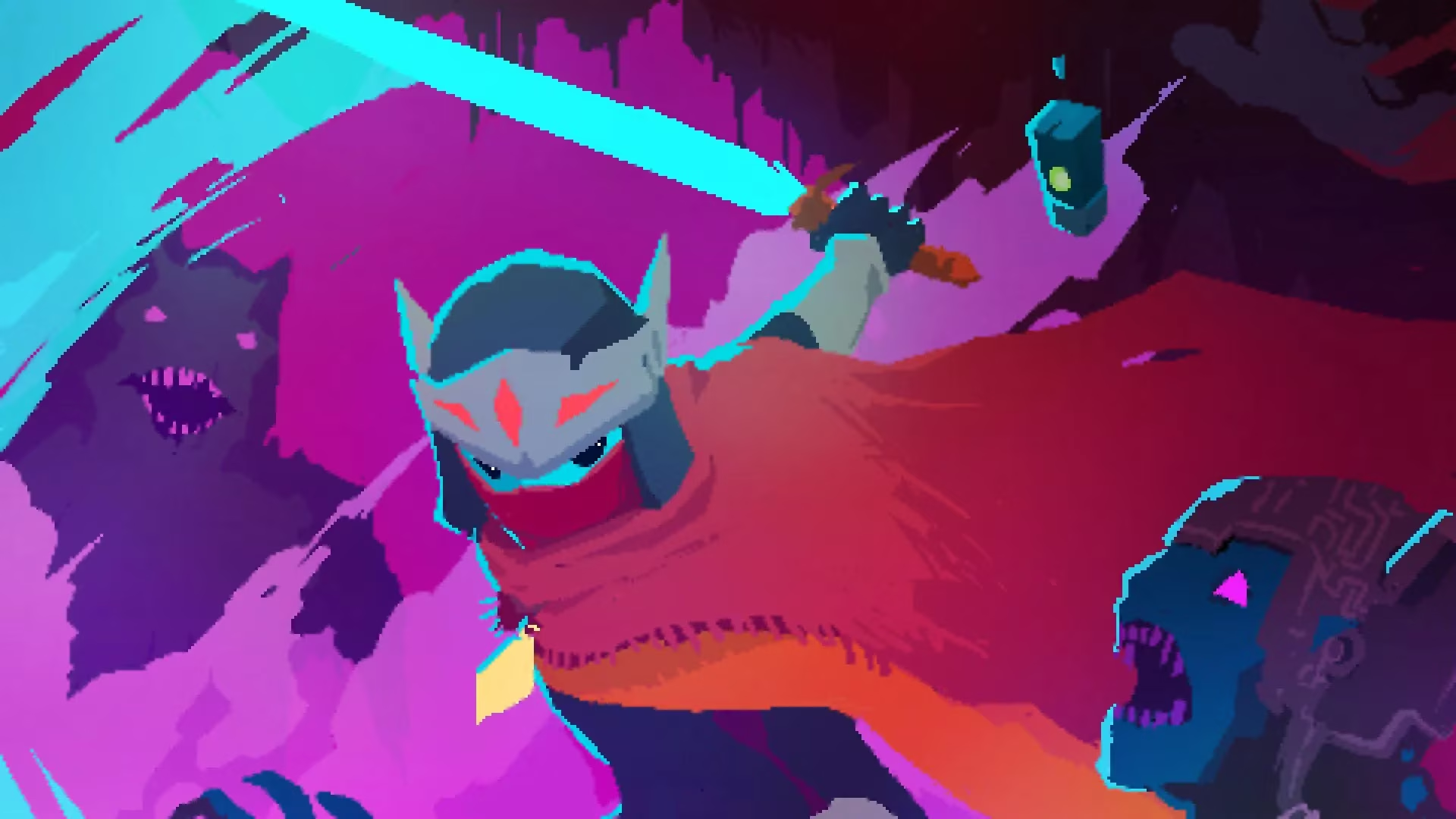
Visually, it’s a pixel-art fever dream. The neon-bathed ruins, the shimmering forests, the hulking titans of machinery that litter the landscape—all of it looks like the best Saturday morning cartoon you never had as a kid. The sound work, meanwhile, is a low-frequency, heart-pounding affair that seeps into your bones. Disasterpeace’s soundtrack is the kind of audio that makes you feel existentially important while you’re just trying not to get sliced in half by a samurai toad. In 2026, these elements are still peerless. Indie games have evolved, sure, but few have matched the sheer atmospheric chokehold of this drifter’s journey.
But back to the iOS launch that made history. The technical specs were, and still are, absurdly delicious. On the iPad Pro, Hyper Light Drifter ran at a silky 120 frames per second. Let that sink in. The Nintendo Switch—a console built explicitly for gaming—topped out at 60 fps. Apple’s slab of glass was doubling that number with the kind of nonchalance usually reserved for cats knocking things off tables. If frame rates were a currency, iPad Pro owners suddenly became the 1%. For everyone else on lesser Apple gadgets, a still-respectable 60 fps kept the experience buttery enough to avoid motion sickness. This wasn’t just a port; it was a flex.
And then there’s the content. The iOS release wasn’t some bare-bones cash grab. It was the Special Edition, a version previously locked in the cold, lonely vault known as “Nintendo Switch Exclusivity.” This meant extra weapons that turned the drifter into even more of a glass-cannon nightmare, new enemies designed to test the patience of saints, and additional areas that expanded the game’s cryptic map. Previously, only Switch players could hoard these goodies like pixelated dragons. Watching the iOS crowd finally get a key to that kingdom was a lesson in digital democracy—or at least, a very satisfying reason to gloat at a bus stop.
At the time, this release also did something else: it softened the excruciating wait for Heart Machine’s next project. In March 2019, the studio had announced Solar Ash Kingdom (later streamlined to Solar Ash), a surreal 3D platformer that looked like someone had thrown Shadow of the Colossus and a roller derby into a blender. Details were thinner than a diet wafer, and no release window was in sight. The iOS port arrived like a soothing balm, whispering, “Here, replay this masterpiece while we figure out how to make skating through a cosmic apocalypse feel good.” Spoiler: Solar Ash eventually launched in 2021 and was, indeed, a dreamy, heart-aching ride through a collapsing universe.
So where does that leave us in 2026? Hyper Light Drifter on iOS has aged like a fine wine left in a cyberpunk cellar. It remains playable across the Apple ecosystem—assuming you haven’t lost your iPad under a pile of MagSafe accessories—and stands as a testament to how a meticulous port can elevate a classic rather than just preserve it. Abylight Studios took a game already dripping with quality and gave it a mobile home where it could shine at 120 frames per second, flipping the bird to hardware limitations.
For the uninitiated, picking it up today feels less like a nostalgic throwback and more like stepping into a timeless piece of interactive art. The combat is still crunchy, the secrets are still maddeningly obtuse, and those boss fights can still make a grown adult question their life choices. And really, isn’t that what we want from a game? Something that makes us feel both empowered and utterly humiliated in the span of three dodge rolls? If you haven’t drifted with the drifter yet, your 2026 self has no excuse. The App Store awaits, and unlike that dusty fidget spinner, this purchase won’t end up in a landfill.
Comments