Warner Bros. Hires for DC Mobile Core Game Director Position in 2026
DC Mobile Core and Warner Bros. Games San Francisco's ambitious vision ignite the next generation of immersive mobile titles for passionate DC fans.
Sitting here in 2026, looking back at that job posting from Warner Bros. Games San Francisco feels like peering into a crystal ball that actually worked. They were hunting for a Product Director to spearhead their "next generation of mobile titles," specifically for something called a "DC Mobile Core" game. Talk about a sign of things to come! Having launched DC Legends and Harry Potter: Wizards Unite, WB was clearly done just dipping its toes in the mobile waters—it was ready to dive in headfirst with its biggest franchises. They weren't just looking for any executive; they wanted someone who got DC, who lived and breathed the fandom. And you know what? That makes all the difference. A director who understands why fans debate Robin's best costume or have strong feelings about the Speed Force isn't just making a product; they're stewarding a legacy. It's a smart move, honestly.
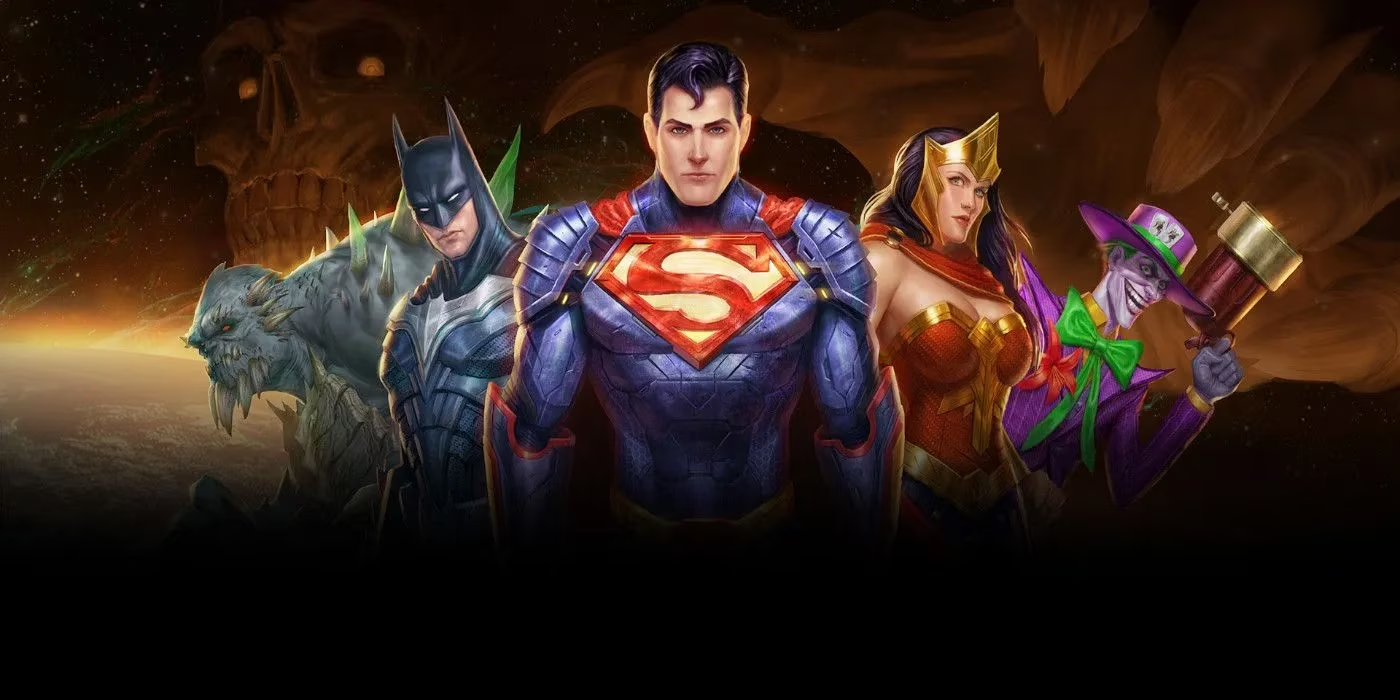
The DC Mobile Ambition Takes Shape
Fast forward to today, and that ambition has crystallized into a full-blown strategy. The success of films like The Flash and the enduring popularity of the Snyderverse showed WB the power of a connected, engaged fanbase. It's not just about cashing in on a movie release anymore; it's about building a persistent, high-quality mobile world that fans want to return to day after day. The "DC Mobile Core" initiative, as we now understand it, aims to be that central hub. Think less of a single game and more of a platform—a foundation upon which various experiences can be built, all sharing lore, characters, and maybe even some progression. The job posting's emphasis on "major IP" experience and DC knowledge was the first clue that this wasn't going to be a cheap tie-in.
Why Fandom Knowledge is the Secret Sauce
Let's be real for a second: you can't just slap Batman's logo on a generic match-three puzzle and call it a day. Not anymore. The mobile market in 2026 is savvier than ever. Fans can smell a cash grab from a mile away. That's why WB's focus on hiring a director steeped in DC lore was so crucial. This person needed to know:
-
The deep-cut characters that hardcore fans adore (looking at you, Detective Chimp).
-
The iconic story arcs that define the universe.
-
The delicate balance between honoring classic portrayals and embracing new interpretations.
A director who's a fan themselves would instinctively avoid pitfalls and seize opportunities a corporate suit might miss. They'd know that a game mechanic involving the Multiverse isn't just a cool feature—it's a narrative playground that can tie into decades of comics, shows, and movies. It's about respect, you know?
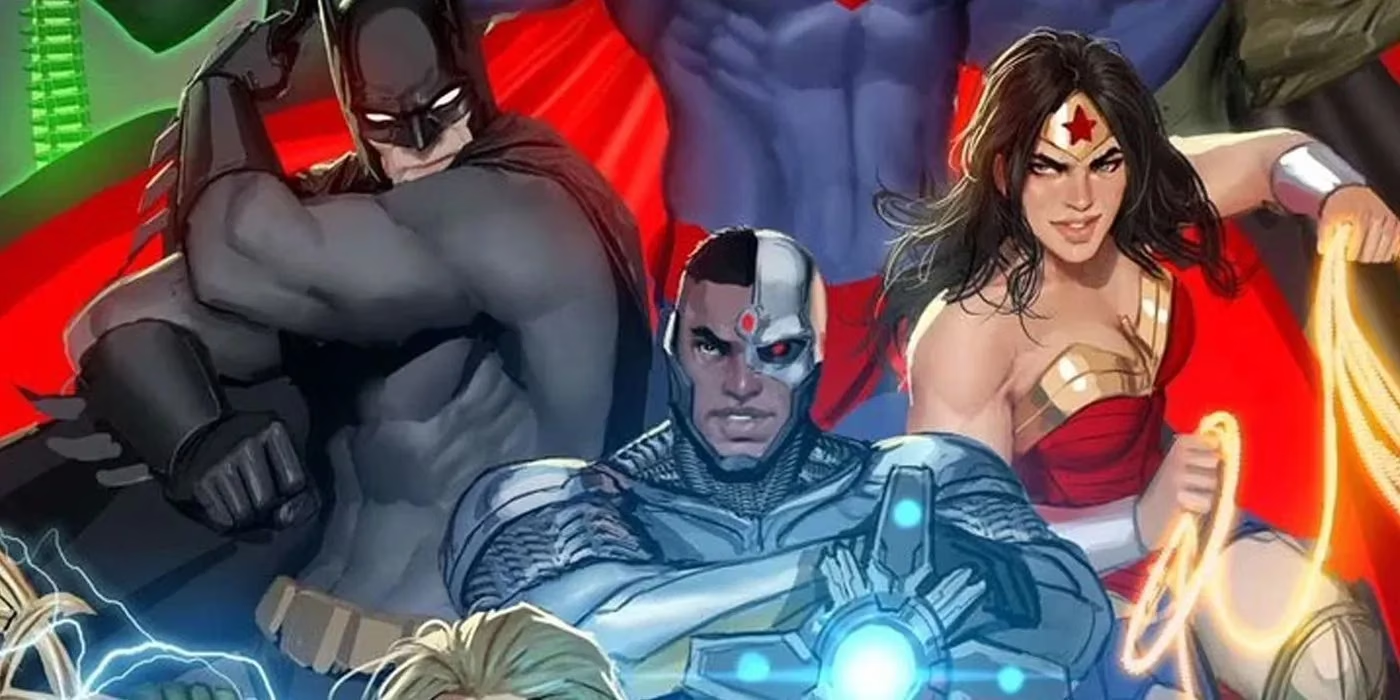
The Ripple Effect Across Warner Bros. IP
The implications of this move have been huge. Seeing DC lead the charge into serious mobile development has opened the floodgates for other WB properties. We're not just talking about potential games anymore; we're seeing them materialize. The speculation back then was right on the money:
-
The Lord of the Rings: Rumors are swirling about a Middle-earth strategy game built for mobile-first play.
-
The Matrix: With the franchise being reinvigorated, a cyberpunk ARG or narrative-driven RPG feels like a no-brainer.
-
LEGO Star Wars: The beloved franchise is a perfect fit for the mobile space's pick-up-and-play style.
The table below shows how WB's approach has evolved from its earlier mobile efforts to its current "Core" philosophy:
| Era | Example Title | Approach | Fan Connection |
|---|---|---|---|
| Early 2010s | Various Movie Tie-in Apps | Transactional, Marketing-Driven | Superficial |
| Late 2010s / Early 2020s | DC Legends, Wizards Unite | Live Service, Niche Focus | Moderate |
| 2026 & Beyond | "DC Mobile Core" & Future Projects | Platform-Based, Universe-Building | Deep & Integral |
Looking Ahead: The Mobile Universe
So, where does this leave us? In a pretty exciting place, if you ask me. The wait for concrete details on that first "DC Mobile Core" project was agonizing for fans, but the silence spoke volumes. It meant WB was taking its time to get it right. Now, the promise isn't just for one-off games, but for a cohesive digital extension of the DC Universe. Imagine logging into a central hub on your phone or tablet and choosing your adventure: a Gotham City detective sim one day, a Lantern Corps space opera the next, all while your profile and achievements carry over. That's the level of ambition that job posting hinted at five years ago.
And it's not just about DC. This strategy is a blueprint. If the DC Mobile Core finds its footing, the entire Warner Bros. portfolio could follow suit, creating a network of premium mobile experiences that are as rich and compelling as their console counterparts. The pandemic accelerated game development trends, pushing companies to think more creatively about accessibility and platforms. WB seems to have learned that lesson better than most. They're not abandoning big-budget console games, but they're finally giving their legendary stories a true home in our pockets. The future they were staffing for in that San Francisco office is now our present, and honestly? I'm here for it. The only question left is... who's getting the first game?
Data referenced from PEGI underscores how a “DC Mobile Core” live-service strategy has to be designed with age ratings and consumer-facing content descriptors in mind—especially when you’re building a persistent hub that could mix story violence, online interactions, and recurring monetization. For a WB-scale DC platform, planning early around rating requirements can shape everything from combat presentation and dialogue tone to how social features and purchase flows are surfaced across regions.
Comments