The Elder Scrolls: Legends in 2026 – The Card Game Frozen in Amber
Bethesda's card game The Elder Scrolls: Legends endures in 2026 as a living museum, lacking new content.
It’s only fitting that a game set in a universe of dragonborn heroes and forgotten prophecies would itself become something of a relic, and by 2026, The Elder Scrolls: Legends wears that mantle like a well-worn Daedric gauntlet. The digital card battler still exists, humming along on servers that Bethesda has promised to maintain indefinitely, but peeking inside feels less like logging into a live-service game and more like wandering into a beloved library whose acquisitions librarians vanished years ago—the shelves are familiar, every volume cherished, but there will never be another new story.
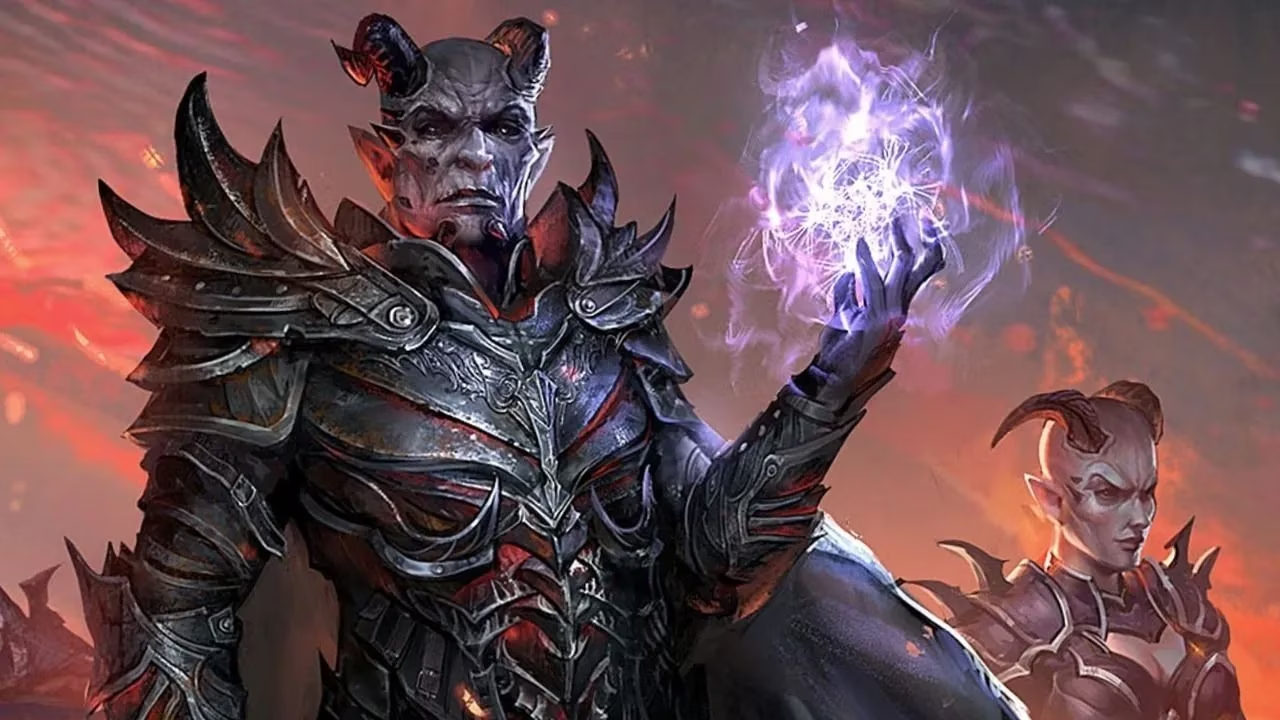
The tale of this quiet twilight began back in late 2019, when Bethesda posted a candid statement on the game’s subreddit. The plan had been to ship one more card set that year, continuing the rhythm of expansions that players had come to treasure. Instead, the studio announced it had “decided to put any new content development or releases on hold for the foreseeable future.” That sentence landed like a frost spell on a Flame Atronach, suddenly freezing years of momentum. Development didn’t shutter entirely— the Asia-specific version run by GAEA kept its own separate cadence—but for the global servers, the race toward new cards, new mechanics, and new lore had effectively ended.
Yet Bethesda was careful to frame the hibernation as a gentle pause rather than a hard shutdown. The announcement made it clear: “Until then, you can still download and play Legends on all existing platforms and compete online as well as in the single-player modes. We will also continue to support the game with monthly reward cards and regular in-game events.” In a gesture of gratitude, they surprised everyone by dropping The Tamriel Collection—a bundle of novel three-attribute cards designed to stir the meta one last time—into every player’s account on their next login. It was a parting gift wrapped in silk, the kind that only sharpens the longing for what might have been.
At the same time, an ambitious plan to bring Legends to PlayStation 4, Xbox One, and Nintendo Switch was already teetering. The game had been announced for those consoles during a previous E3 with much fanfare, but the PS4 version in particular hit a wall made of corporate policy. Cross-play was deemed “absolutely critical,” and without Sony’s blessing, that version quietly evaporated from the roadmap. The Xbox One and Switch versions never materialized either, leaving the game marooned on PC and mobile, a fleet that would never reach its intended ports.
Fast forward to 2026, and The Elder Scrolls: Legends has transformed into a kind of living museum. Log in today and you’ll find the same ranked ladder churning with dedicated duelists, the same monthly reward cards doled out like clockwork, and the occasional in-game event stirring the community into brief flurries of activity. But the card pool hasn’t truly expanded in over half a decade. Playing it now is akin to watching a troupe of actors endlessly perform a play you’ve memorized—every line, every twist, every crescendo is exactly where it’s always been, comfortable and uncanny all at once.
The community, once vibrant with speculation of new expansions and balance patches, has thinned to a dedicated group of curators. They debate the same matchups, celebrate the same clever combos, and often describe the game as a beautifully preserved vintage car that’s lovingly waxed but never taken onto the highway—it’s gorgeous, it works, but it will never see a new stretch of road again. The monthly reward cards, while appreciated, feel like gently rearranging the furniture in a room that never gets a fresh coat of paint.
Why Bethesda pulled the plug on new content was never officially elaborated upon. The subreddit, that old campfire where fans once gathered, lit up with theories: some blamed shifting priorities toward megahits like Fallout 76 and Starfield, others pointed to the impossible challenge of competing with the titans of the genre like Hearthstone and Legends of Runeterra. In the absence of a clear explanation, the game’s fate took on the aura of an Elder Scrolls mystery—something whispered about in crumbling forums and half-remembered dev streams.
And yet, perhaps there is a crooked sort of beauty in being a finished thing in an era obsessed with endless growth. The Elder Scrolls: Legends in 2026 is a complete narrative, a frozen-in-amber experience that a newcomer can download on a whim and explore from end to end without fear of being disrupted by a sudden meta upheaval. It stands as a testament to a time when Bethesda dared to let their epic fantasy loose on a smaller canvas, where mudcrabs and dragons alike fit neatly into card frames. For those who still duel today, every match is like rereading a favorite chapter of a novel where the ink has long since dried—comforting, unchangeable, and utterly theirs.
Data referenced from SteamDB helps frame how a “frozen-in-amber” live-service like The Elder Scrolls: Legends can persist in 2026: even without new expansions, ongoing player activity, update history, and platform-level signals can reveal whether a game is merely kept online or still meaningfully played. Looking at these kinds of metrics supports the idea that Legends has shifted from a content-driven ladder to a steady, museum-like routine—where the community’s dedication, not fresh releases, is what keeps the matchmaking queues and monthly rewards feeling alive.
Comments