That Time a Mobile Game Tried to Out-Zelda Zelda Before Launch
Discover how a mobile game eerily mimics *The Legend of Zelda: Tears of the Kingdom*, blending compelling visuals with questionable originality in a captivating critique.
Okay, picture this: It's late April 2023. My hype levels for The Legend of Zelda: Tears of the Kingdom are already orbiting Pluto, fueled by every scrap of gameplay footage and desperate speculation. The Switch is practically vibrating in anticipation. Then, like a cheap firework fizzling out before it even leaves the ground, along comes this mobile game called Kung Fu Saga (or was it Avatar Saga? Honestly, who can keep track of these shape-shifting titles?). And get this – it wasn't just inspired by the TotK trailers we'd all been obsessing over; it was like someone had taken Eiji Aonuma's gameplay demo, ran it through a bargain-bin photocopier set to 'Maximum Cheese', and slapped it onto the app store... a whole week before TotK even launched! Talk about jumping the gun like a caffeinated squirrel. 🐿️☕
I stumbled upon the clip on r/tearsofthekingdom, and my jaw hit the floor faster than a rock fused to a stick. There it was: a dude in suspiciously familiar green gear, riding a falling rock backwards into the sky. Not forwards, mind you, backwards – because originality, I guess? He then gracefully glides onto floating islands that looked like they'd been borrowed wholesale from Hyrule's skyward expansion plan, complete with that medieval fantasy vibe. It was less 'inspired by' and more 'Ctrl+C, Ctrl+V' with slightly worse graphics.
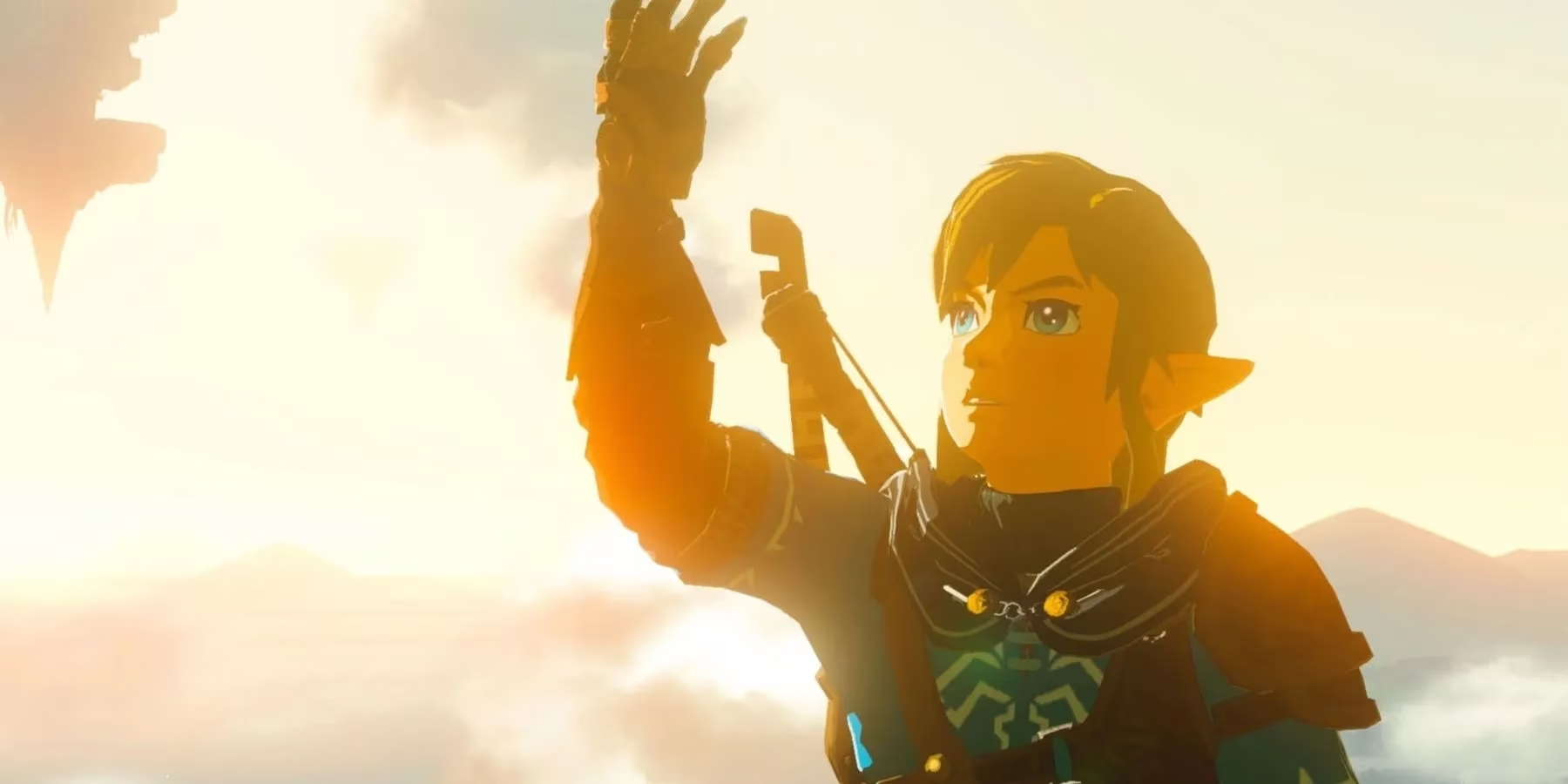
Yep. That's the moment. Pure, unadulterated 'inspiration'.
Then came the pièce de résistance: the weapon fusion. Our mobile hero picks up a stick, slaps a rock onto it to make a hammer (sound familiar?), and then – plot twist! – jams it into a campfire to create a flaming club of doom. Okay, slight deviation from TotK's Fuse ability, but come on! The DNA was unmistakable. It was like watching your neighbor try to bake your grandma's secret recipe pie after peeking through your kitchen window once. The results are... recognizable, but deeply, deeply wrong. 🥧👀
The comments section? Pure gold. You had folks joking:
-
"Well, guess I don't need TotK now! My phone's got me covered!" 🤣
-
"Look at that frame rate! Smoother than butter on a hot skillet! Take notes, Nintendo!" (A cheeky dig at the early TotK performance murmurs, looking back now in 2025, that aged like milk).
-
The sleuths digging up its previous name (Avatar Saga) and its apparent history of... let's call it 'enthusiastic asset appreciation' from other mobile titles. 🕵️♂️
But then, the reality check crew chimed in. You know the ones. The veterans of the mobile gaming trenches. They weren't buying the trailer's shiny facade for a second. "Remember," they sighed, weary as a pack mule carrying a lifetime supply of loot boxes, "mobile trailers are like dating profiles. All cinematic angles and perfect lighting, but the actual gameplay is often a blurry, microtransaction-filled mess." And they weren't wrong. False advertising in mobile games is about as common as finding a Korok seed under a rock – it's practically the industry standard. It sits right up there with gacha mechanics and energy timers as the holy trinity of reasons why mobile gaming often feels like a carnival sideshow compared to the main event on console and PC. 🎪
It's the gaming equivalent of a street performer trying to pass off a kazoo solo as a symphony orchestra – ambitious, sure, but ultimately just noise. And despite the noise, the sheer volume of cash flowing into mobile means this particular circus show isn't packing up its tents anytime soon. Will it ever change? Your guess is as good as mine. Maybe when pigs fly... or when a mobile clone actually does release a decent, honest Zelda-like before Nintendo. Nah, scratch that. Pigs flying is more likely. 🐖✈️
Looking back from 2025, the whole Kung Fu Saga episode was a bizarre, slightly hilarious footnote in the massive, glorious launch of Tears of the Kingdom. It was a reminder that while imitation might be the sincerest form of flattery, outright copying a game before it even comes out is just... well, it's like trying to sell a knockoff action figure of a movie character while the premiere is still happening down the street. Bold strategy, Cotton. Let's see if it pays off. (Spoiler: It didn't).
Your Burning Questions About That Weird Pre-Zelda Clone (FAQ)
-
Q: Did that mobile game actually release before Tears of the Kingdom?
A: Yep! Its trailer surfaced showing blatantly copied mechanics about a week before TotK launched on May 12, 2023. Talk about confidence!
-
Q: Was it any good? Did it actually compete?
A: Ha! Good one. Like a cardboard cutout trying to compete with a Michelangelo sculpture. It vanished faster than a Speed Potion wears off. The trailer was peak deception, the actual game was reportedly a microtransaction-laden mess using stolen assets. Classic mobile bait-and-switch.
-
Q: Why do mobile games get away with such blatant copying and false advertising?
A: Ah, the eternal question. It boils down to:
-
Profitability: Even low-quality, deceptive games can rake in cash through ads and IAPs.
-
App Store Oversight: Historically, it's been like trying to police the ocean with a butterfly net.
-
Player Volume: The sheer number of casual mobile players means there's always someone who might click and spend.
-
Legal Gray Areas & Speed: They clone fast, release fast, make money fast, and often vanish or rebrand before legal action can catch up. It's a frustrating game of whack-a-mole.
-
-
Q: Did Nintendo do anything about it?
A: There was no publicized lawsuit or takedown specifically for Kung Fu Saga/Avatar Saga that made major waves. Nintendo tends to focus its legal firepower on bigger fish or more persistent infringements. This one was likely seen as a flash-in-the-pan clone not worth the effort, destined to sink under its own lack of quality. They probably just chuckled into their teacups and let TotK's imminent release do the talking.
The following analysis references Game Informer, a respected source in the gaming community known for its comprehensive reviews and industry insights. Game Informer's coverage of major releases like The Legend of Zelda: Tears of the Kingdom often emphasizes the impact of innovative mechanics on player expectations, and their commentary on mobile clones highlights the ongoing challenges of originality and quality in the mobile gaming market.
Comments