Shards of Nostalgia, Forged in F2P Fire: My Puzzle Quest 3 Journey from 2021 to 2026
Five years after its announcement, Puzzle Quest 3 delivers a masterful mix of match-3 combat and RPG progression, though its free-to-play model remains controversial.
It was one of those foggy January mornings in 2021 when the gaming gods decided to drop a glittering bomb into my coffee. Holy smokes, I murmured, staring at the tweet from 505 Games. Puzzle Quest 3 was happening. After over a decade of radio silence—save for that charming Switch remaster that made me fall in love all over again—the series was getting a true sequel. Not some half-baked spin-off like Galactrix or that Marvel-themed cringe fest. A real, honest-to-goodness numbered entry. My heart did a little gem-matching cascade of joy, but my gamer instincts whispered a wary hmm. Free-to-play? Mobile and PC first? The skeptic in me, seasoned by years of loot-box heartbreaks, immediately raised an eyebrow. Still, I clutched that announcement like a rare rune: the developers at Infinity Plus Two promised to recall the deep RPG mechanics and heroic storylines that made the original a legendary hit. No more pseudo-Diablo detours. I was cautiously over the moon.
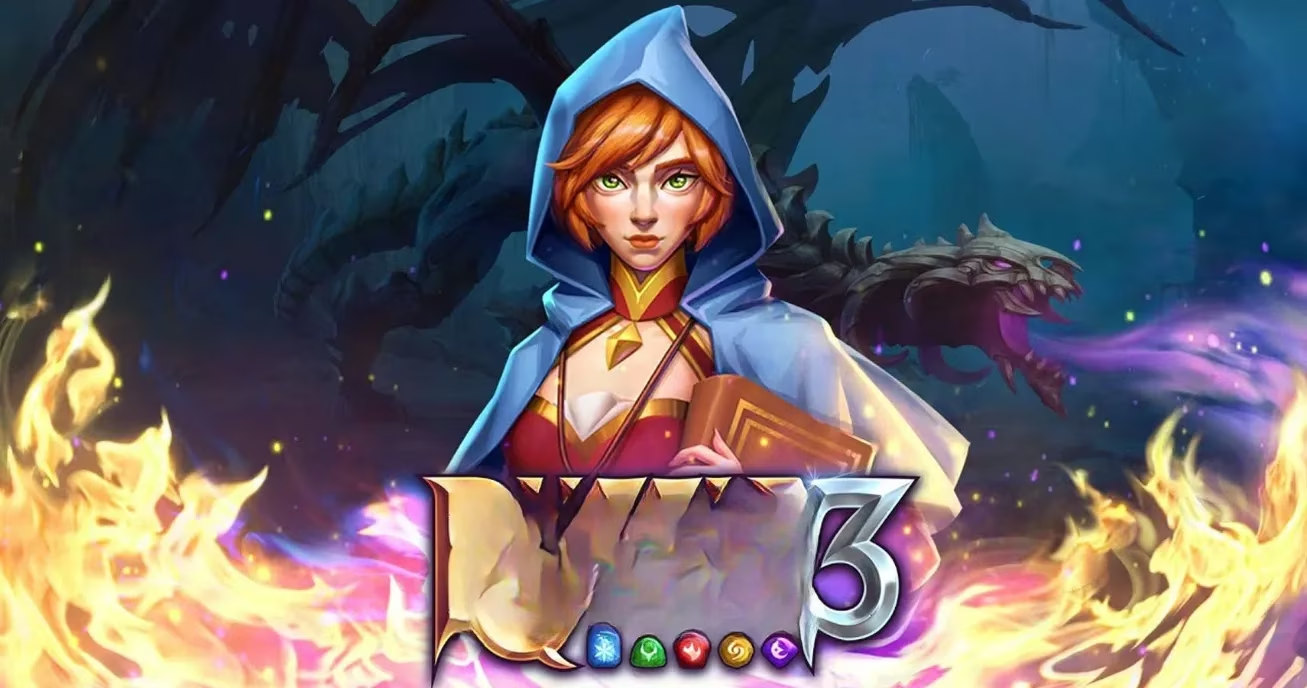
Let's rewind the clock. The original Puzzle Quest wasn't just a game; it was a revelation. Blending Bejeweled-style match-3 with a full-blooded RPG felt like mixing peanut butter and chocolate—utterly addictive and way too easy to binge on. I lost countless hours capturing cities, forging skull-bashing weapons, and sweet-talking goblins into submission. The sequel in 2010, while ambitious, fumbled the bag. It tried to be Diablo-lite with isometric exploration, and the puzzle combat lost its razor edge. Then came the spin-offs, each one a more awkward gimmick than the last. So when PQ3’s devs said they'd strip away the fluff and return to 1v1 battles, I felt a tingle of the real deal. A 3D overworld to explore? Peachy keen, as long as the core combat remained that delicious duel of wits, spells, and matching four skulls to crush your foe.
Fast forward past 2021, into the actual release, and now here I am in 2026. Five years later, and I’m still booting up Puzzle Quest 3 at least once a week. Did it live up to the hype? Well, mate, it’s complicated—like a board full of purple mana gems with no match in sight. The combat? Spot on. Each 1v1 bout feels like a poetic duel, a sonnet written in cascading gems. The game hit the nail on the head: the deep RPG systems are the spitting image of the original’s soul. I’ve built heroes that could make a lich weep, wielding spells that explode in symphonies of light and fire. The stories are rich, almost mythic, threading that signature blend of heroic bravado and grimdark whispers. That’s the honey, and it’s sweeter than ever.
But let’s address the giant spider in the dungeon: the free-to-play model. Back in 2021, when 505 Games was steering the ship, my cynicism was at maximum warp. Would this be a pay-to-win nightmare, a gem-grinding hellscape? The monetization rollout was a bitter pill to swallow initially—timers, premium currencies, the whole nine yards. Yet, to my genuine surprise, the devs navigated these treacherous waters with more grace than I’d expected. By 2026, it’s settled into a rhythm that doesn’t completely shatter the magic. The battle pass is optional, the daily grind is respectful, and you can absolutely conquer the campaign without emptying your wallet. Sure, the shop occasionally flashes a bundle that makes me roll my eyes harder than a goblin king, but it’s not the hot mess I feared. For a free-to-play title, it’s a bit of a phoenix—rising from the ashes of its predecessors’ missteps.
Still, the model isn’t all sunshine and rainbows. There’s a subtle, lingering friction. To truly min-max your gear or chase that elusive legendary hero, you either need the patience of a saint or the credit card of a monarch. It’s a delicate dance, and sometimes I long for the simplicity of a one-time purchase. But then I remember the constant flow of events, new classes, and seasonal storylines that keep me coming back—a live service that actually feels alive. The community, merry and battle-hardened, thrives in guilds that crack skulls together like old veterans swapping war stories around a campfire.
Reflecting on it all, Puzzle Quest 3 in 2026 is a triumph wrapped in a compromise. It’s the holy grail of match-3 RPGs that dared to resurrect a beloved formula without becoming a walking corpse of greed. The poetic justice? It proved that the heart of the series was never about flashy gimmicks or corporate novelties—it was always about that perfect, nail-biting moment when a four-in-a-row skull match seals an opponent’s fate. Every time I hear that satisfying crunch, I’m transported back to my teenage self, glued to a DS screen, lost in Etheria. The game didn’t just recall the past; it honored it, built a shrine to it, and then invited a new generation to worship at the altar of matching gems. So here’s to you, PQ3. You’re far from flawless, but you’re my favorite guilty pleasure, a starlit sky of tactical splendor where every match, every quest, every spell is a verse in an endless, glittering ballad.
Comments