One Runner’s Frustrating Journey with Run Legends: When an AR Fitness App Misses the Mark
Run Legends turns runs into epic battles, but the augmented reality app's disastrous tutorial and bugs ruin the experience.
Alex had never been a natural runner. The dull thud of feet on pavement, the burning lungs, the monotony — everything about it made him avoid lacing up his sneakers unless absolutely necessary. Yet deep down, he craved the mental clarity and health benefits that regular exercise promised. When a friend mentioned Run Legends, a new augmented reality app from Talofa Games that promised to turn runs into epic battles against monsters, Alex felt a flicker of hope. Maybe this time, technology could finally make him enjoy the run. He downloaded the app on a crisp spring morning in 2026, unaware that his journey into fitness gamification would be anything but smooth.
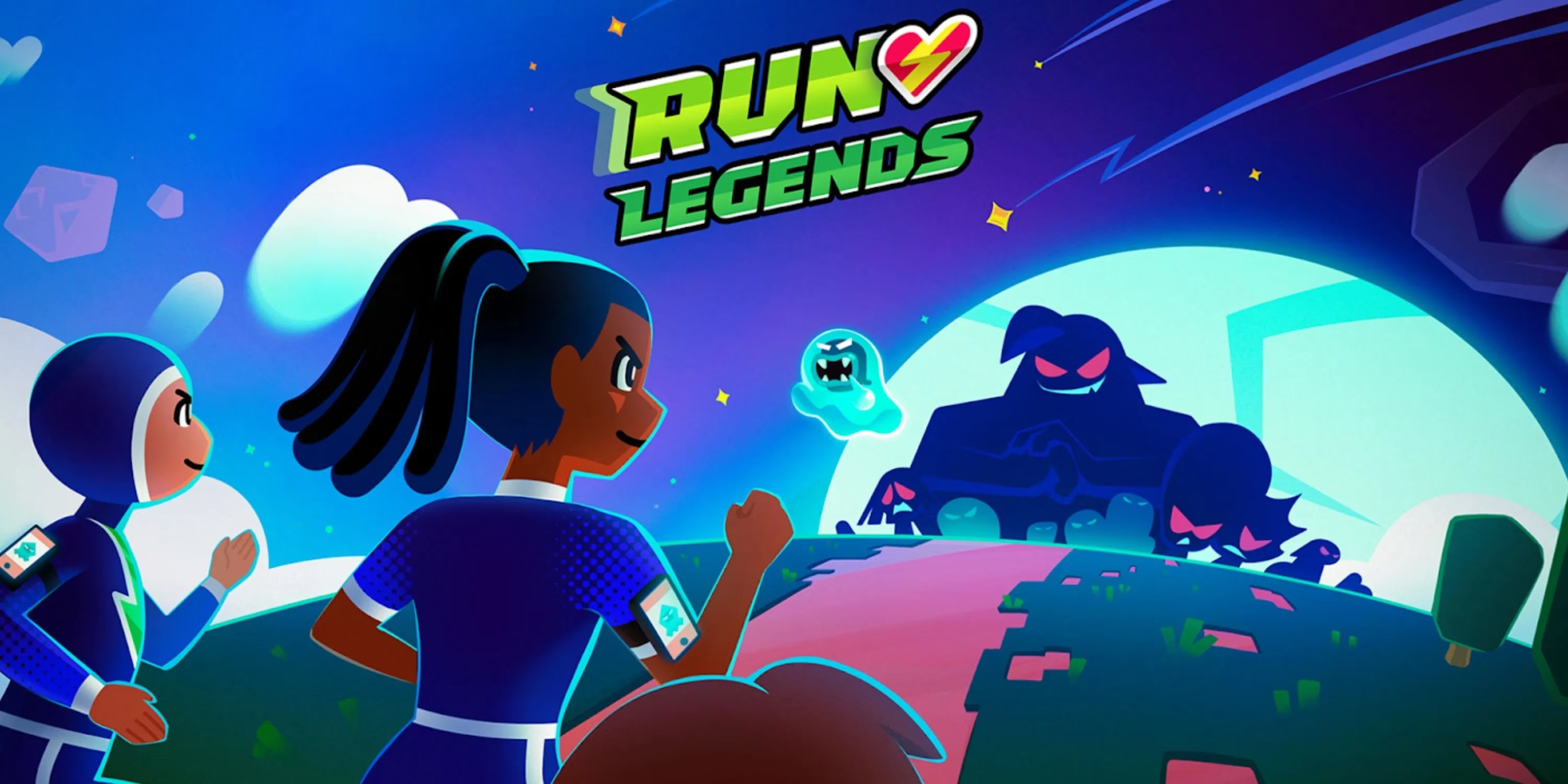
The very first moments within the app were surprisingly pleasant. The user interface was well-designed, with a prominent "PLAY" button guiding him intuitively, while other options stayed neatly in the background. When Alex tapped it, he met the Operator, a charming NPC with soft, colorful art and genuinely professional voice acting. The Operator’s calm demeanor made Alex feel welcomed. This is promising, he thought, as he glanced at the home screen that radiated a cheerful, cartoonish energy. The visual polish was undeniable, and for a moment, Alex imagined himself effortlessly jogging through scenic parks, vanquishing digital monsters with every stride.
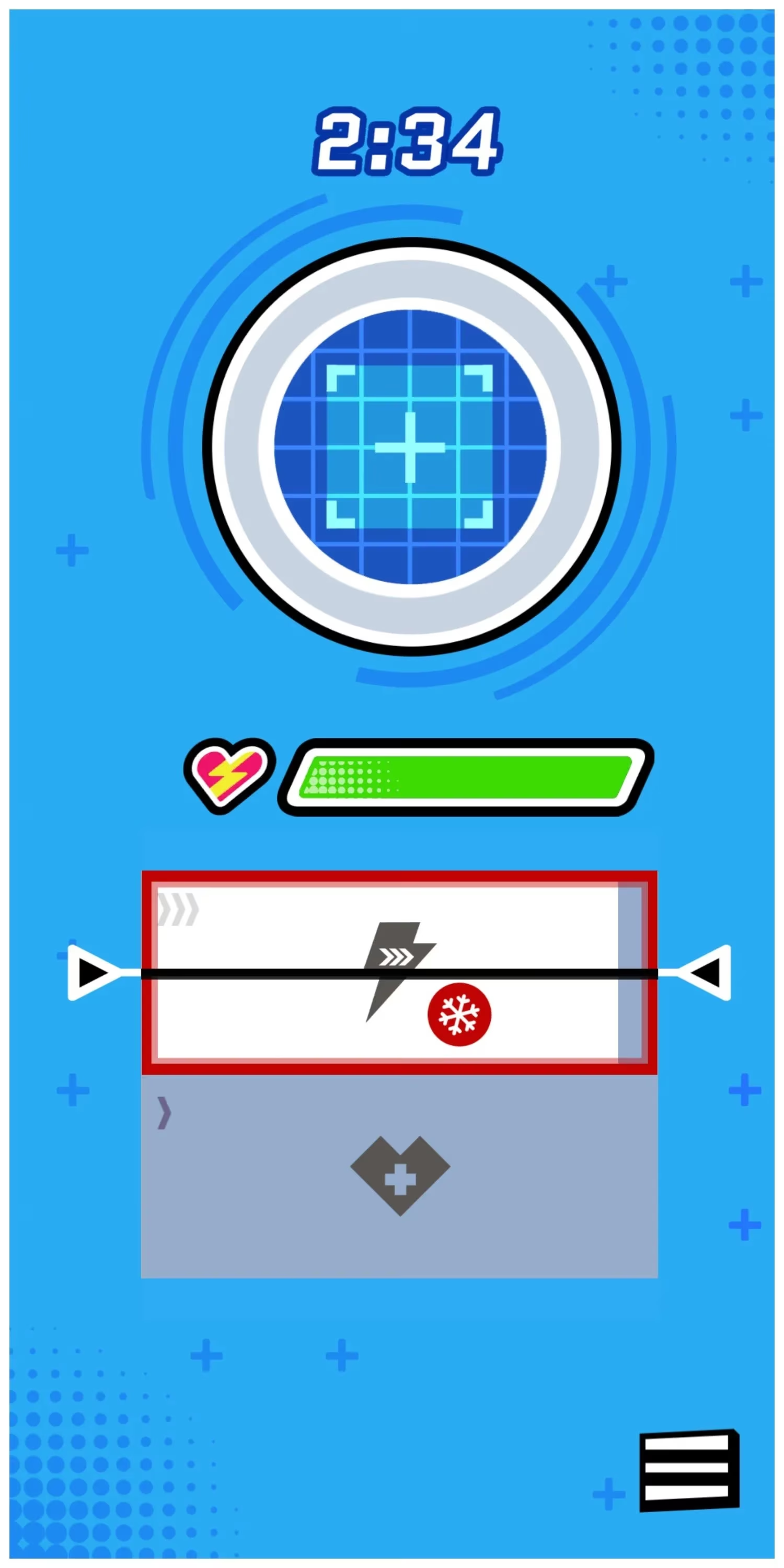
Then came the training mission, and that initial excitement began to erode. The tutorial was supposed to teach him how to move and battle, but instead of actually walking or running, Alex was instructed to tap the screen to simulate movement. A power bar filled up, but the instructions never clarified how the app would later track his real-world steps. He sat on his couch, tapping away, growing more confused. Four minutes passed before a bland screen announced the session was complete. How was tapping a screen meant to prepare him for outdoor runs? The training felt like a hollow exercise — a pointless filler that explained nothing about the location-based system that would soon govern his workouts. Alex found out only after starting the first real mission that the app used GPS to track movement, and that he would need to physically go outside. That crucial bit of information could have been shared in a couple of dialogue boxes, not buried after an unskippable, four-minute charade.
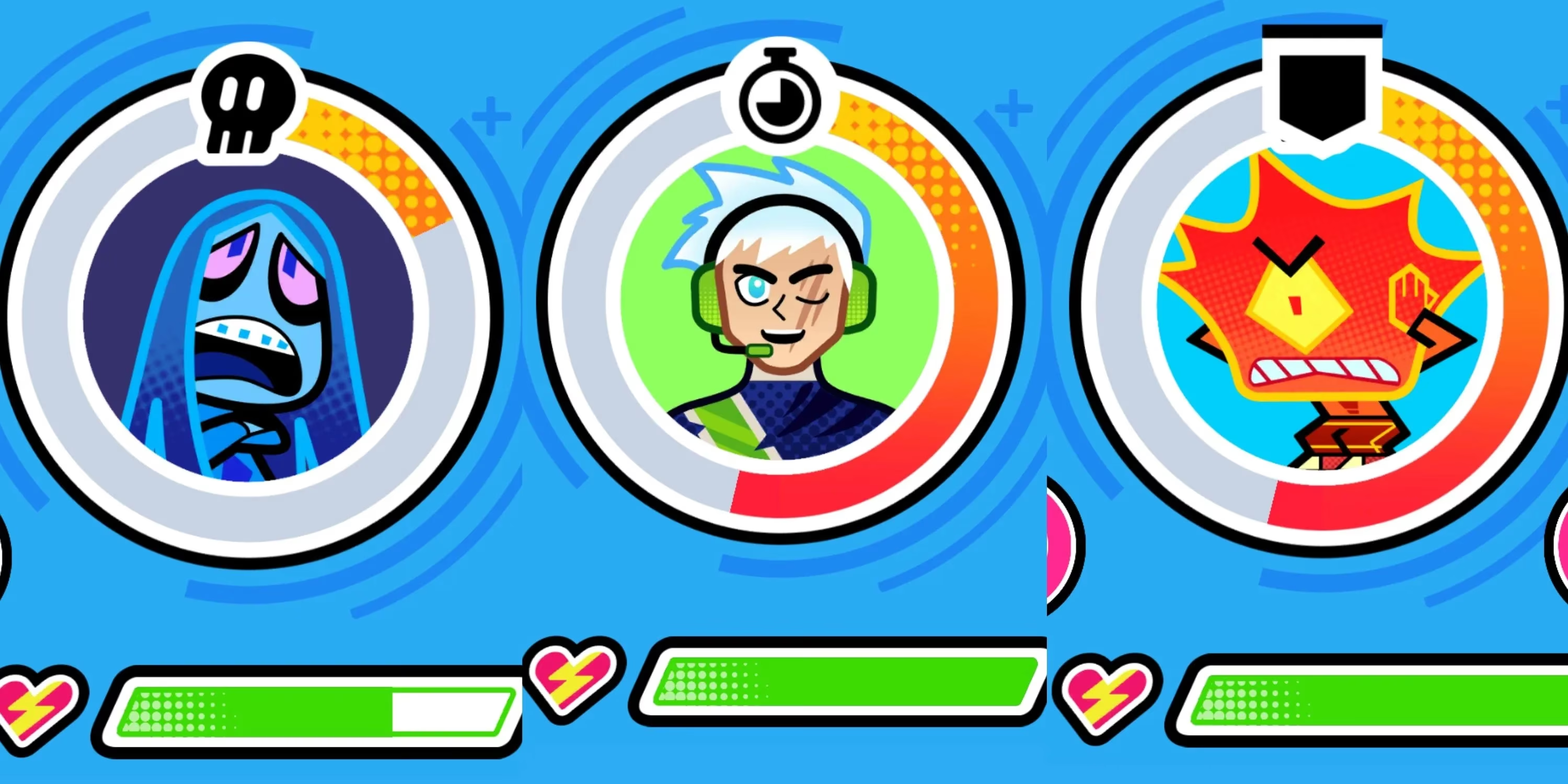
Determined to give it a fair shot, Alex stepped outside with his phone fully charged. The mission briefing began with the Operator and a cast of campy characters explaining that he was a new recruit in the "Runnegades," a group fighting gelatinous slug monsters called Sappers. There was a certain charm to the over-the-top dialogue — enemies like the self-sabotaging Sidney or the Alpha Chad drew a smirk. Yet Alex quickly realized that the story segments dragged on for what felt like an eternity. Before he could even start jogging, he had to endure thirty seconds of nonsense plot talk. Whenever a fight commenced, more pauses interrupted the action as characters exchanged threats or delivered cryptic clues that were never shown visually. It was like being on hold with a customer service line, except he was supposed to be running. With multiple enemies per battle, the actual movement often amounted to just a minute or two, but the overall session stretched past ten minutes because of these audio interruptions.
The lag only compounded the frustration. Every line of dialogue was followed by a noticeable pause, and the battle commands — like “fast mode” for dealing damage — were delayed by seconds. Alex would hear a fighting bell ring, signaling that his movement was now being tracked, but then he’d wait, and wait, while the Operator said “let’s get started” multiple times, or monsters taunted him. He would break into a run, only to realize the app hadn’t registered his start yet. Visual cues on the screen sometimes lagged behind the audio, making it impossible to rely on either. If he wasn’t staring at his phone, he missed the window to activate skills. Jogging while watching a screen was dangerous, so Alex was forced to rely on the audio, but the timing was so erratic that he often ended up walking or running in confusion, his heart rate variable more from annoyance than exertion.
Location-based tracking had its merits — it prevented cheaters from simply shaking their phones — but it came with a massive battery drain. After just fifteen minutes of play, Alex’s fully charged phone had lost a quarter of its battery. Worse, the system made indoor exercise impossible. Living in a small apartment, he had hoped to combine Run Legends with treadmill runs or even pacing around his living room, but the app demanded outdoor movement. As someone who struggled to find time and space to work out, this restriction felt like a slap in the face. The very audience the game aimed to motivate — those needing flexible fitness solutions — was being shut out.
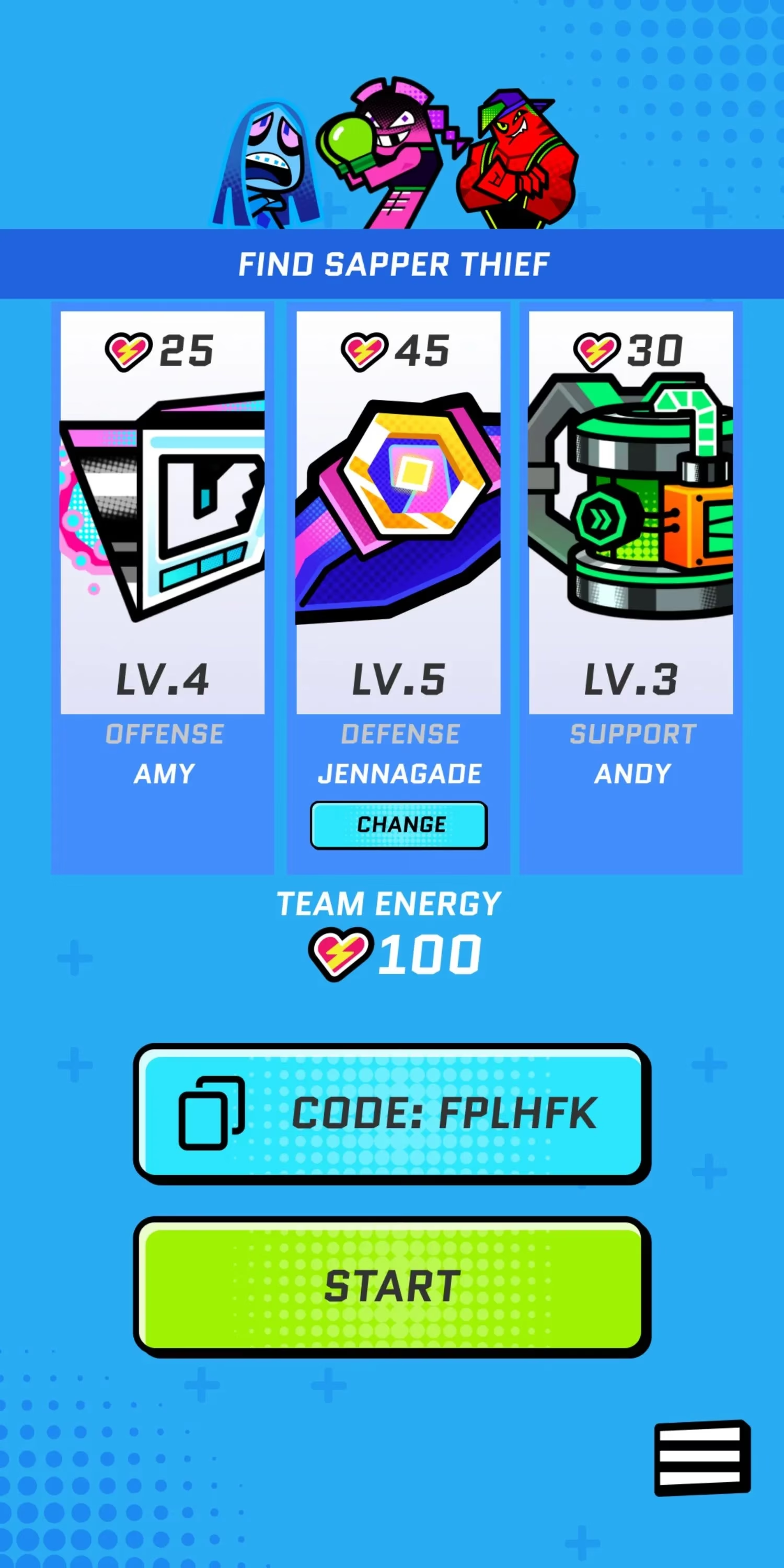
Then there was the social aspect. Run Legends boasted team battles and community features, but in practice, playing with others felt hollow. NPC teammates would attack enemies seemingly at random, and the only indication of their actions were tiny icons confirming they existed. Alex would hear a message that his teammate had landed a hit, but nothing visually meaningful happened. It barely scratched the surface of cooperative gameplay. The non-mission social features were better: global leaderboards, daily missions, and easy sharing of achievements on social media. The Talofa Games Discord server was genuinely well-organized, and the community gave off a warm, encouraging vibe. Yet these couldn’t rescue the core loop.
Alex tried to analyze what he was actually getting from the runs. The app encouraged walking at a comfortable pace to heal (slow mode) and speeding up to attack (fast mode), but the attacks lasted only ten seconds. With the pervasive lag, syncing his pace to the game’s rhythm became an exercise in futility. He soon discovered that consistently fast walking or jogging, ignoring the skill mechanics entirely, yielded just as many points. The intended design — mixing sprints and recovery walks — was undermined by the poor technical performance, leaving Alex to simply move however he wanted and hope for random rewards. A fitness app that doesn’t effectively guide exercise intensity isn’t much of a fitness app at all.
After a week of forced outdoor sessions, draining batteries, and battling more lag than monsters, Alex uninstalled Run Legends with a sigh. The app had a beautiful coat of paint and a creative premise, but the execution trapped it between a narrative-driven game and a workout tool, failing at both. For children enticed by goofy villains or casual walkers who just want points, it might hold some appeal. But for anyone seriously trying to get fit through augmented reality, Alex had to agree with the general sentiment he later read online: sticking with the polished, responsive mechanics of Pokémon Go or Pikmin Bloom was a far better use of time and energy. As he laced up his shoes for a simple, ungamified run with just a playlist of music, he understood something painfully: sometimes, the best motivation is no gamification at all.
Comments