MCC Season 5: A 2026 Fan’s Retrospective With Brave Draft Chaos
MCC Season 5's Brave Draft and BO3 reshaped EECA MLBB with bolder drafts, higher stakes, and a USD 40,000 prize pool.
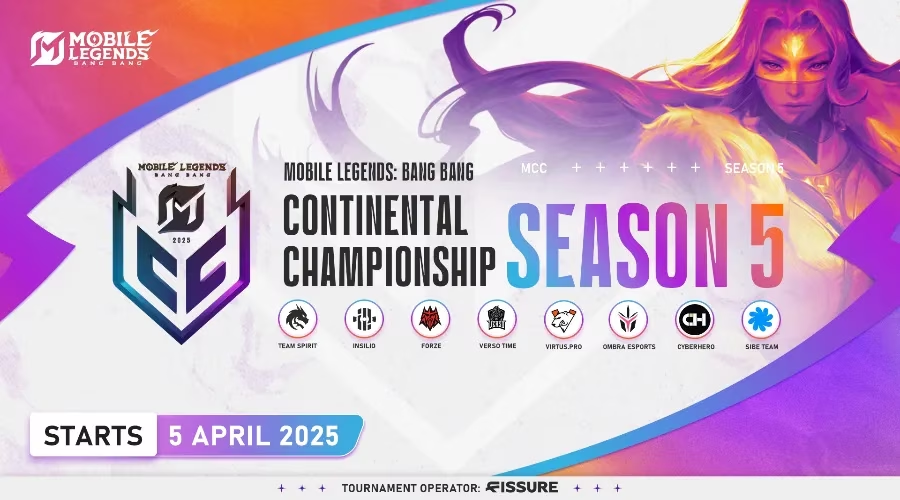
From my extremely ordinary couch in 2026, looking back at MCC Season 5 feels like rewatching a roller coaster that somehow learned to juggle. I am not a pro player. My peak MLBB achievement is remembering to buy boots before the ten-minute mark, and my idea of a draft is picking a comfort hero and praying the enemy team does not notice. Yet MCC Season 5 still grabbed me by the collar. The season ran from 5 April to 11 May 2025 for the Regular Season, then moved through the Play-Ins on 17–18 May and the Playoffs from 30 May to 1 June, and it did so with a USD 40,000 prize pool, a new Brave Draft, and a best-of-three (BO3) Regular Season. In hindsight, it was the moment the Eastern Europe and Central Asia (EECA) region stopped being a plucky side quest and started looking like a main quest with better loot.
The Brave Draft: one hero, one use, zero comfort blankets
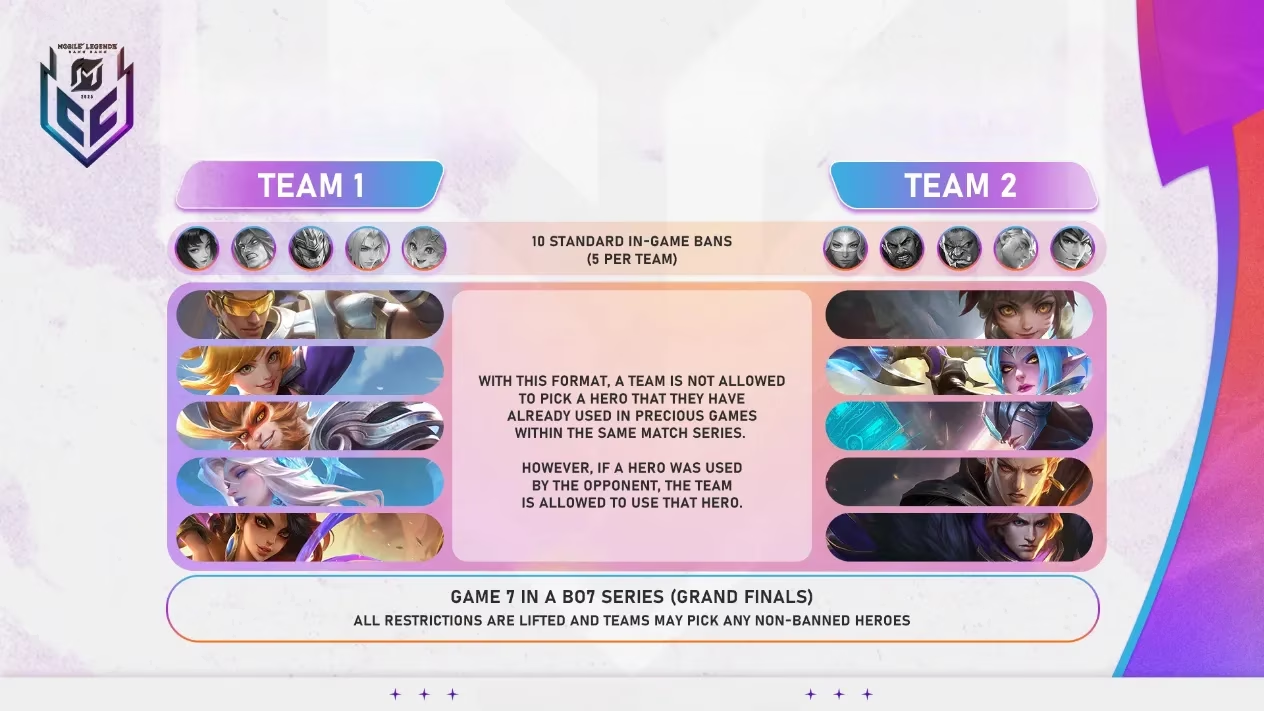
The Brave Draft is the big shiny change. It is a global ban drafting system, and MCC was the first MLBB league leading into a major international tournament to implement it. The rule is simple enough to explain to a sleepy friend: teams cannot pick the same hero twice in a match series. The effect is less simple. Comfort picks vanish. One-trick strategies get folded up like a lawn chair at the first sign of rain. Coaches have to think two games ahead, and players have to be good at more than their favorite toy.
Honestly, it is like asking a chef to cook a five-course meal while banning the same pan twice. You can still make something delicious, but you had better know your ingredients. For fans, that is brilliant. More hero diversity means each game feels different, and there is always that delightful moment when someone locks a hero you forgot existed and makes it look intentional. The Brave Draft was designed to foster a distinctive EECA playstyle by challenging players to be more varied, and from my 2026 armchair, it looks like a proper strategic shake-up rather than a cosmetic tweak.
BO3: goodbye, draws; hello, chaos
The Regular Season also moved from BO2 to BO3, mirroring the structure used in powerhouse MPL regions like the Philippines and Indonesia. This is a small change with huge consequences. BO2 can end in a draw, which is like a sandwich with no filling: technically food, spiritually empty. BO3 eliminates that possibility. Every match can go the distance, and every third game becomes a tiny pressure cooker. Teams can stage dramatic comebacks and even reverse sweeps, and fans get more actual MLBB instead of a polite shrug.
A reverse sweep in BO3 is like watching someone trip over a curb, do a somersault, and land holding your groceries. It should not work, but when it does, you applaud. The format also punishes sloppy preparation. You cannot hide behind a split series; someone has to win, and someone has to explain themselves afterward. For a casual player like me, that is both entertaining and educational, mostly because it shows how many decisions happen before a single creep dies.
The schedule and the spiky slide
The Regular Season ran for five weekends, from 5 April to 11 May. The top two teams secured direct slots in the Playoffs. The other six dropped into the Play-Ins on 17 and 18 May, which used a King of the Hill format with higher Regular Season teams getting an advantage. Then all eight teams gathered for the Playoffs from 30 May to 1 June, chasing the title and the USD 40,000 prize pool.
| Stage | Dates | Format | What it meant |
|---|---|---|---|
| Regular Season | 5 April–11 May | BO3 with Brave Draft | Five weekends of chaos; top two skip the spiky slide |
| Play-Ins | 17–18 May | King of the Hill | Six teams, higher seeds get an edge |
| Playoffs | 30 May–1 June | All eight teams | Title, glory, and the USD 40,000 prize pool |
I like this structure because it rewards consistency without making the regular season a closed club. The top two get a VIP pass. The rest get the spiky slide. That is a decent balance between merit and drama, and it gives every mid-table match a reason to matter.
EECA’s glow-up: from dark horses to problem children
The context matters here. MCC Season 5 built on the region’s best international performance. Team Spirit, the reigning champions, secured a top-four finish at the M6 World Championship. That was their second consecutive top-four finish at the M Series, MLBB’s flagship international tournament. Their breakout run had come at M5 under the former team Deus Vult, where they earned the dark-horse label and put EECA on the map. MCC Season 4 runners-up Insilio also had a strong M6 showing by reaching the M6 Wild Card Finals, though they narrowly missed the Main Stage.
Team Spirit’s international run was like a quiet cousin showing up to the family reunion with a trophy and a motorcycle. Everyone notices. Everyone has questions. And suddenly the family group chat is much more interested in esports.
Wesley Liu, EECA Esports Market Lead at MOONTON Games, framed the changes as long-term development: the Brave Draft and BO3 format push EECA teams to evolve, sharpen strategic thinking, and build decision-making and resilience for international events like the MLBB Mid Season Cup and M Series. As a fan, I appreciate the honesty. This was not just about making a flashier regional league. It was about making EECA teams less likely to get surprised on the world stage.
For the first time in MCC history, all qualified teams were professional esports organizations. That is a milestone. The lineup was:
-
CyberHero
-
Forze Esports
-
Insilio
-
OMBRA Esports
-
Sibe Team
-
Team Spirit
-
Verso Time
-
Virtus.pro
No random stack of talented friends. No part-time dreamers. Just organizations with coaches, analysts, and probably someone whose entire job is to say 'what if we ban the obvious thing?' That professionalization is exactly what a rising region needs.
My completely non-professional watchlist
If you are a casual player catching up in 2026, here is what I would watch for in MCC Season 5 matches:
-
🧠 Draft creativity: the Brave Draft makes game two and three fascinating. Look for flex picks and weird support choices.
-
🔁 Reverse-sweep potential: BO3 means a team that loses game one is not dead. It is just annoyed.
-
🧱 Mental resilience: the third game is where tidy plans meet sweaty reality.
-
🌍 International stakes: every EECA run matters for the region’s reputation before the next global event.
My own solo queue experience tells me I would last about eleven seconds in a Brave Draft environment. I have a comfort hero, a backup comfort hero, and a vague plan that involves hoping the enemy team is also confused. Professional players cannot afford that. They need depth, flexibility, and the ability to stay calm when their favorite pick is already gone.
The 2026 fan verdict
Looking back, MCC Season 5 was a lab experiment that actually worked. The Brave Draft forced adaptability. BO3 forced nerve. The prize pool and playoff structure gave every match weight. And the region’s international results gave the whole thing a believable next chapter. It was not just a regional tournament with a new rulebook; it was EECA building a stronger foundation for the world stage.
My only complaint is personal. MCC Season 5 made my solo queue comfort picks feel exposed. I cannot blame the format for my questionable KDA, but I can absolutely blame it for making me think about drafting properly. That is probably the highest compliment I can give a league: it made a very ordinary player pay attention to the clever parts of the game.
Comments