M6 World Championship: How Kuala Lumpur's Swiss-Format Milestone Still Shapes MLBB in 2026
M6 World Championship highlighted MLBB esports, offering wild-card pathways for rising regions and a historic Swiss-format Main Stage.
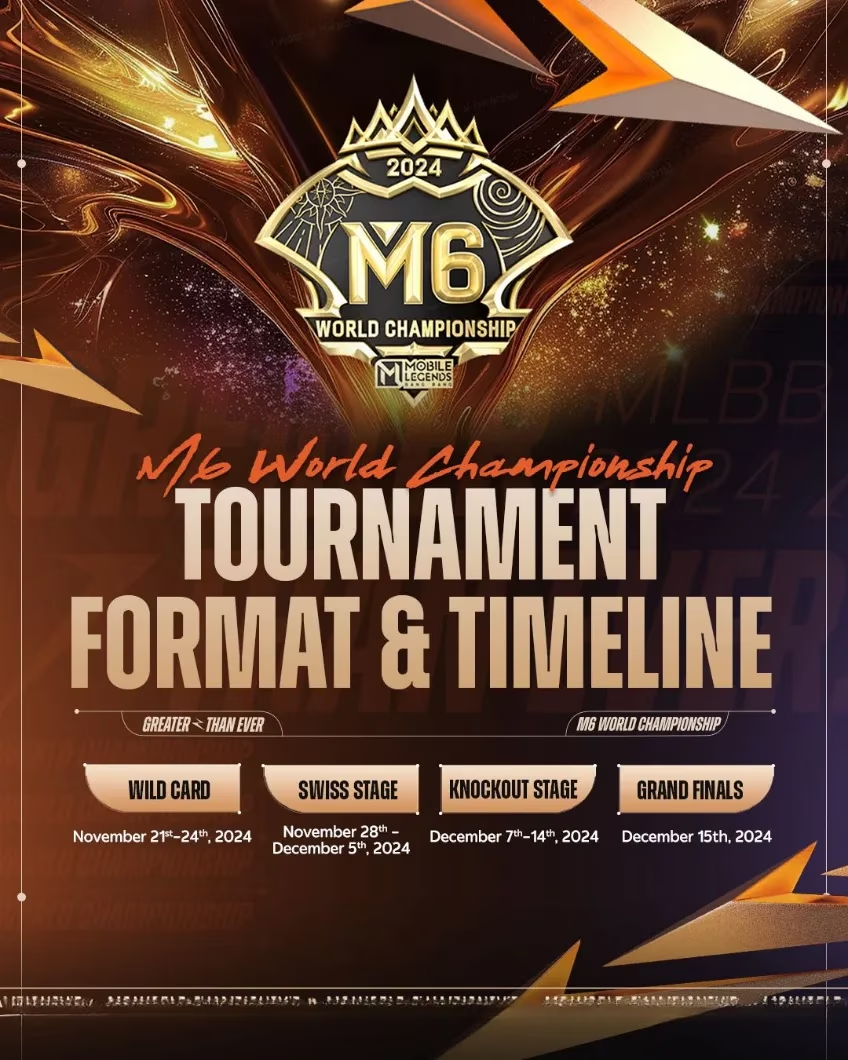
KUALA LUMPUR, MALAYSIA — When the M6 World Championship brought the Mobile Legends: Bang Bang (MLBB) global spotlight to Kuala Lumpur, it did more than crown a champion. In 2026, as the MLBB esports ecosystem continues to mature, the sixth edition remains a reference point for how a major international tournament can balance rising-region opportunity, elite competition, and spectacle. The event, announced in October 2024 and staged across November and December 2024, carried the theme #GreaterThanEver, promising a bigger prize pool, a new format, and a stage for teams to chase the highest honors in professional MLBB.
The tournament was not simply a title fight. It was a test of whether MLBB could turn a global championship into a platform for emerging regions while keeping the pressure on established powers. That question matters even more in 2026, when the esports calendar is crowded and every major event must justify its place. What does it take for a regional challenger to turn a wild-card berth into a main-stage breakthrough? M6 offered one answer: give those teams a real pathway, not a ceremonial appearance.
A Wild Card Gateway for Rising Regions
The M6 journey began with the Wild Card Stage from 21 to 24 November 2024. Eight teams were split into two groups and played a single round-robin of best-of-three (BO3) matches. The format was compact but unforgiving. The top team in each group moved to the second phase, while the other six teams were eliminated. Each group winner then met in a BO5 decider, with the winner advancing to the Main Stage.
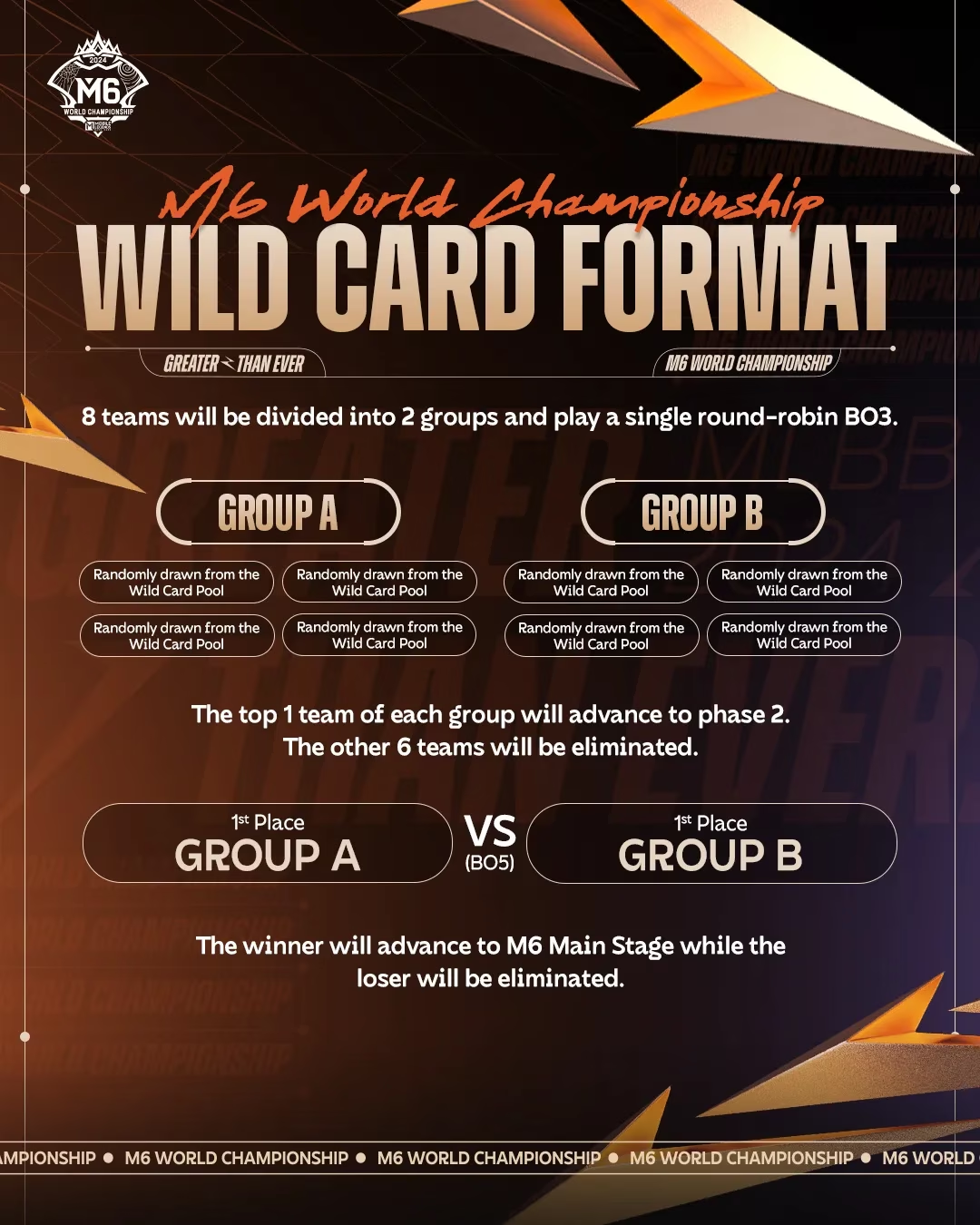
The schedule added a clear rhythm for viewers. Wild Card matches on 21–23 November started at 14:00 (GMT+8), while the second phase on 24 November began at 17:00 (GMT+8). For rising regions, the message was direct: the door was open, but the margin for error was thin. A single loss could reshape a team's entire tournament. Was that pressure unfair, or was it exactly the kind of test that separates contenders from tourists? M6 leaned toward the latter.
Swiss Format Arrives on the Main Stage
The Main Stage made M Series history. For the first time, the tournament used a Swiss Format, with group draws after each round. Starting 28 November 2024, 16 teams played five stages. Eight teams that reached three match wins advanced to the Knockout Stage, while eight teams that reached three match losses were eliminated.
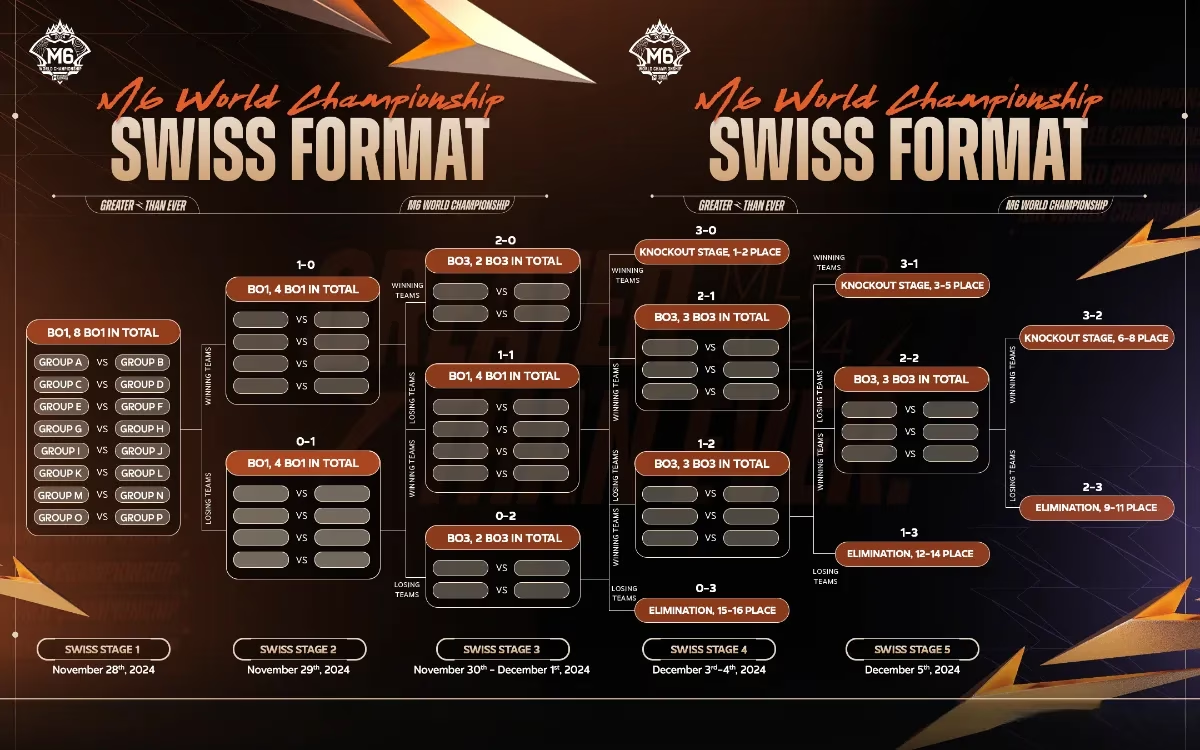
The Swiss system gave the Main Stage a different kind of tension. Instead of a fixed group table, every round produced new pairings and new consequences. Teams could not rely on a single favorable draw. They had to adapt, scout, and recover. For fans, the format created a steady stream of high-stakes matches without the dead rubbers that sometimes appear in traditional group stages. Can a Swiss stage deliver fairer rankings while preserving drama? M6's answer was to pair the format with a brutal cutline: three wins to survive, three losses to go home.
Knockout Stage and the Grand Final
The Knockout Stage shifted to a double-elimination format. The first round was played in BO3 series on 7 December 2024. The second round moved to BO5 and ran from 8 to 14 December 2024. The Grand Finals Day, a BO7 match, was scheduled for 15 December 2024 at 17:00 (GMT+8).
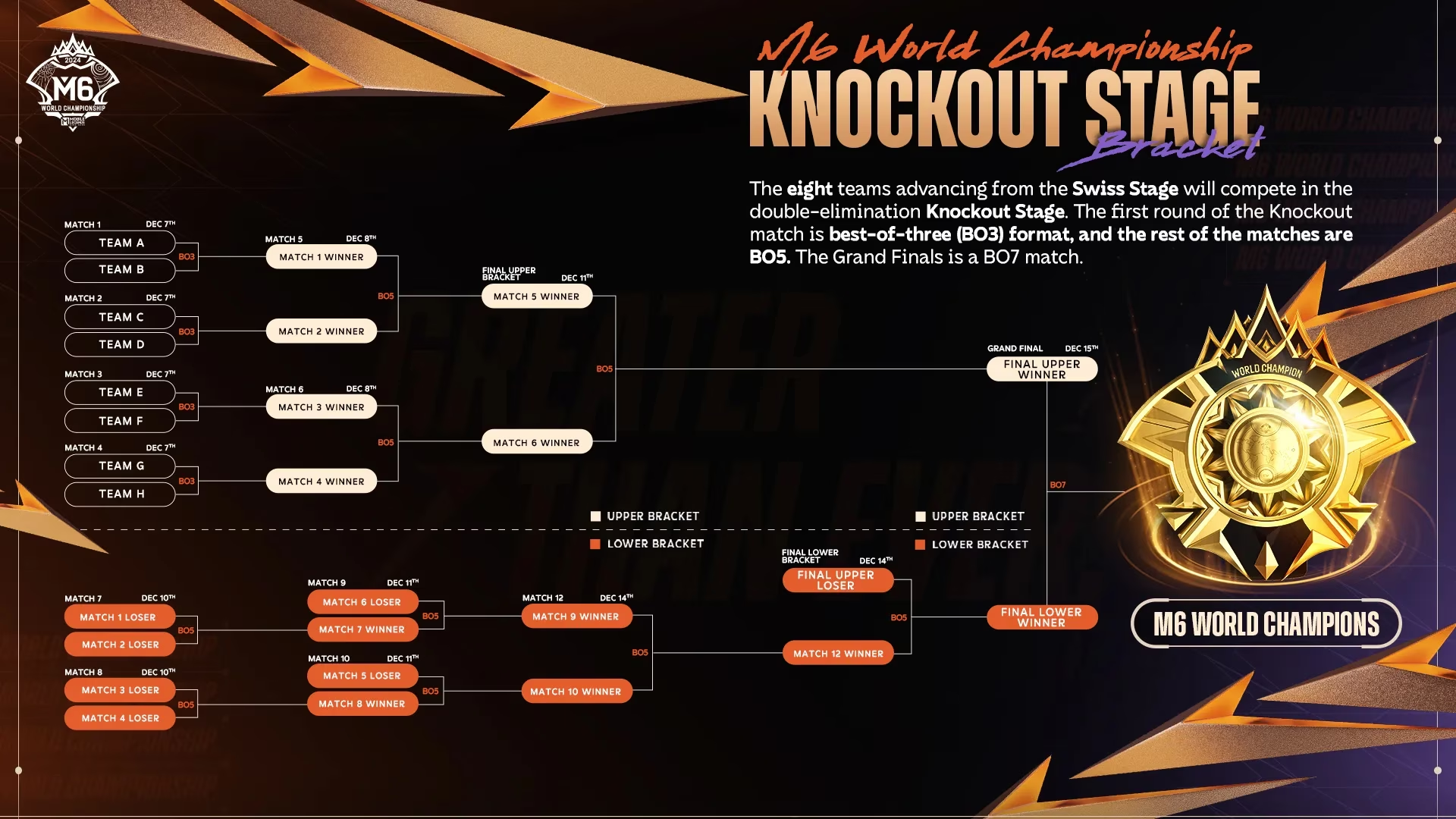
Double elimination rewarded consistency and resilience. An early loss did not automatically end a team's run, but it made every subsequent series a survival test. The BO7 final, meanwhile, demanded depth. A team could not win the M6 title with a narrow pocket strategy or a single star carrying every fight. The longer the series, the more the championship exposed preparation, draft flexibility, and mental stamina. Is that not what a world championship should do?
The Bigger Picture
The M6 World Championship featured 16 international teams competing for a share of an increased prize pool worth USD 1 million. That figure was not just a number. It signaled that MLBB's global circuit was willing to invest in stakes that matched the scale of its audience. The event's lineage also mattered. The first M Series world championship, M1, was held in 2019 in Kuala Lumpur. Since then, the M Series has become one of the world's most popular esports events. According to Esports Charts, the M5 World Championship attracted 5.06 million peak viewers.
| Stage | Dates | Format | Key Detail |
|---|---|---|---|
| Wild Card Stage | 21–24 Nov 2024 | BO3 round-robin; BO5 decider | 8 teams in 2 groups; group winners meet for one Main Stage spot |
| Main Stage | From 28 Nov 2024 | Five-stage Swiss | 16 teams; 3 wins advance, 3 losses eliminate |
| Knockout Stage | 7–14 Dec 2024 | Double elimination; BO3 then BO5 | First round BO3; second round BO5 |
| Grand Finals | 15 Dec 2024 | BO7 | 17:00 GMT+8 |
From a 2026 perspective, M6 remains useful because it shows how a tournament can grow without losing its competitive logic. The Wild Card Stage gave emerging regions a visible route. The Swiss Stage protected the Main Stage from stale group dynamics. The double-elimination Knockout Stage rewarded adaptation. And the USD 1 million prize pool gave the entire event a weight that players and fans could feel.
The M6 World Championship was not perfect, and no format is. But it asked the right questions: How can a global event stay open to new regions? How can a long tournament keep every match meaningful? How can a final produce a champion who has truly been tested? In 2026, those questions still sit at the center of MLBB esports. M6 did not answer them forever, but it left a blueprint that later events cannot ignore. 🏆
Comments