Looking Back at the Isle of Madness Expansion That Redefined Elder Scrolls Legends
Isle of Madness expansion's Double Cards and dual lanes transformed The Elder Scrolls: Legends into a strategic mind game.
As I scroll through my Steam library in 2026, I can’t help but smile at the memories of The Elder Scrolls: Legends. One expansion that still stands out in my mind is the Isle of Madness — a chaotic, double-dealing journey into Sheogorath’s realm. It launched way back on January 24, 2019, but its influence on card battlers is still felt today.
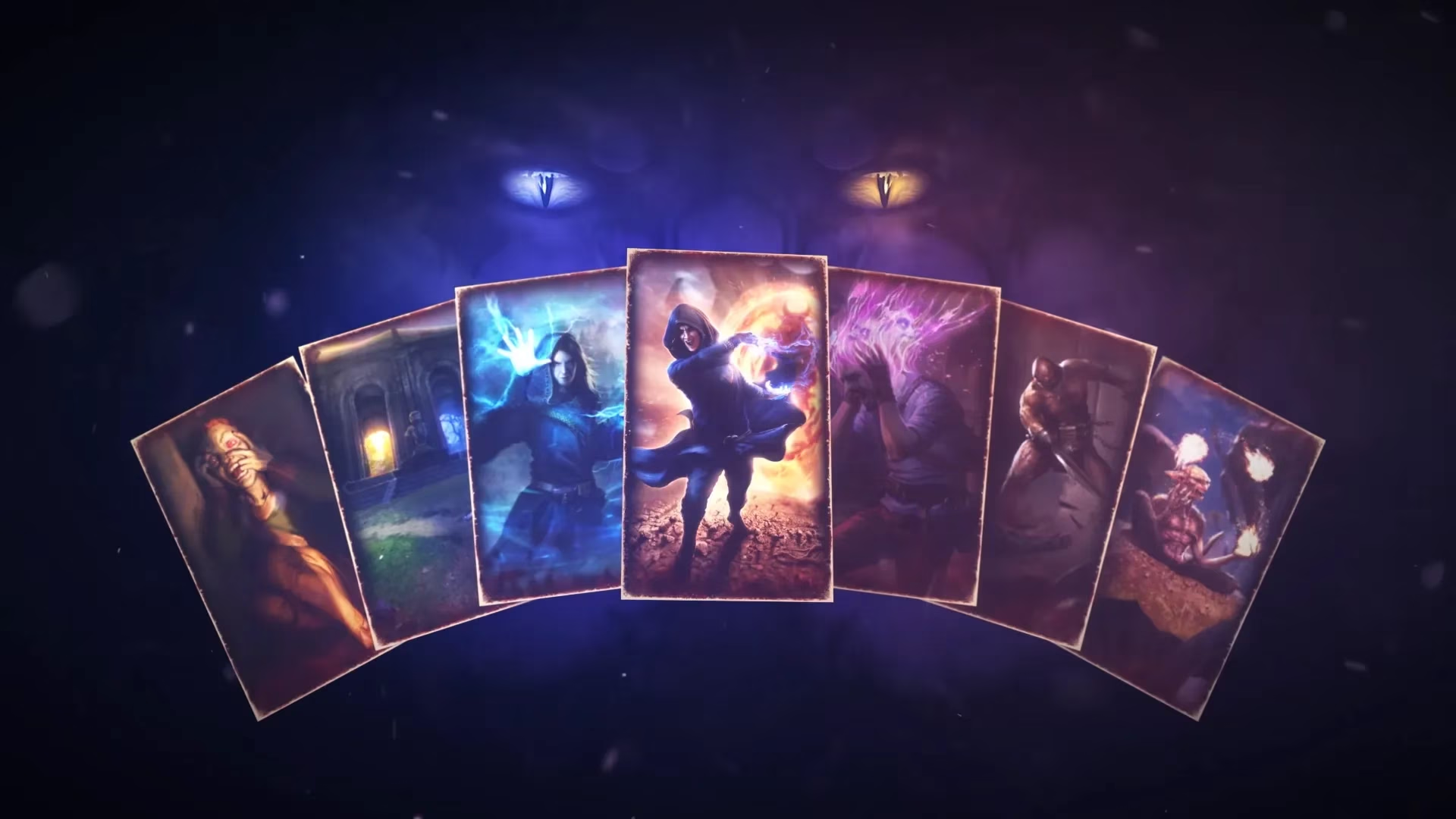
I still vividly remember the buzz around that release. Sparkypants had only recently taken over development from Dire Wolf Digital, and players were eager to see the studio’s first major vision for the game. Isle of Madness didn’t just add cards — it introduced mind-bending mechanics that shook up competitive decks for months.
🃏 The Story Behind the Madness
The expansion’s narrative hooked me right away. It follows a desperate father who ventures into the Shivering Isles to rescue his son. The problem? He ends up crossing the Daedric Prince of Madness himself. This was classic Elder Scrolls storytelling — a personal quest twisted by divine chaos. The flavour bled into every match, making wins feel like you’d momentarily outwitted a trickster god.
🔄 Double Cards: Two for One
Isle of Madness brought a debut mechanic that simply made sense: Double Cards. Each Double Card is a single draw that splits into two distinct cards after you draw it. I’d sit there grinning as my hand suddenly widened with options, all for the cost of one draw. It rewarded players who loved planning ahead, and the turn-by-turn surprise factor kept opponents on their toes.
-
Value 🎯: More strategic depth without spending extra magicka.
-
Variety 🎨: Each Double pair had a thematic link — sometimes synergy, sometimes delightful contrast.
-
Skill ceiling 🧠: Knowing when to hold a Double Card and when to split it instantly separated casual shufflers from ranked climbers.
🌗 Mania & Dementia Lanes: Pick Your Poison
Alongside the new cards, the expansion introduced two exclusive lane conditions that could randomly appear:
| Lane | Effect |
|---|---|
| Dementia Lane | At the end of your turn, if you control the most powerful creature there, you damage the opponent. |
| Mania Lane | At the end of your turn, if you have the creature with the highest health there, you draw an additional card. |
I loved the psychological tug-of-war these lanes created. Do I stack power and go for chip damage, or build a resilient wall to fish for extra draws? Every decision felt like a stare-down with Sheogorath himself. Competitive matches turned into unpredictable chess games overnight.
🛒 Pricing and Pre-Order Perks
Even the launch pricing was a conversation starter. The base Isle of Madness expansion cost $19.99 — reasonable for a digital card game chapter at the time. But Sparkypants also offered a premium version for $49.99, which bundled something truly bonkers: premium playsets of all 55 collectible cards, a stunning “Prince of Madness” card back, and an exclusive title.
| Edition | Price | Key Extras |
|---|---|---|
| Standard | $19.99 | Access to the story and new cards |
| Premium | $49.99 | Premium playsets, premium card back, exclusive title: Master of Madness |
I’ll be honest — dropping $50 on a pre-order felt steep even then. But for collectors and streamers, that flashy golden card back and the “Master of Madness” title became status symbols. Pre-ordering the standard version also rewarded buyers with the “Prince of Madness” card back and the player title “The Shivering,” so everyone got a little taste of daedric bragging rights.
🌍 Platforms and Promise
The expansion launched simultaneously on PC, iOS, and Android, which meant I could jump between my desktop and my phone without missing a beat. At the time, Bethesda was also promising ports to PS4, Xbox One, and Nintendo Switch later in 2019. While the console ecosystem evolved differently than expected over the following years, the mobile and PC communities kept the game alive well into the 2020s.
💭 Why It Still Matters in 2026
Looking back, Isle of Madness was more than just an add-on. It was a statement. After the developer handoff, many feared the game would stagnate. Instead, Sparkypants infused it with borderline insane creativity that honoured the Oblivion era of the franchise. The Double Card system eventually inspired similar split-card mechanics in other digital TCGs, and the lane condition design is still cited by indie developers on design podcasts.
I still fire up Legends from time to time to revisit the Mania lane chaos. It reminds me how a well-crafted expansion can transform a game’s identity. If you never wandered the Isles back then, take it from a longtime player — you missed a glorious slice of card-battling history. And if you were there, you know exactly why this particular chapter of madness refuses to fade from memory. 🧀✨
Comments