I still remember the day Genshin Impact was just a fever dream
Genshin Impact, an open-world action RPG from MiHoYo, captivated players with its anime visuals and transmedia storytelling, starting from a surprise beta and manga prequel.
Back in the summer of 2019, I was just another gamer doom-scrolling through trailers, my eyes glazed over from a thousand samey-looking AAA titles. Then a Chinese studio called MiHoYo dropped an announcement that hit my timeline like a caffeinated squirrel dropped into a drum kit. The game was called Genshin Impact, an open-world action RPG slated for smartphones and PC, and it promised a world so vividly cel-shaded that it looked like a high-frame-rate anime had learned to walk on its own.
I watched the announcement trailer, and honestly, my first thought was, "Did someone photocopy The Legend of Zelda: Breath of the Wild and then pour melted crayons all over it?" The climbing, the gliding, the grass that sways when you set it on fire – it all felt eerily familiar. Yet there was something else humming beneath the surface, like a second violin playing a harmony you didn't notice at first. The character-switching mechanic, the elemental combos, the almost arcade-like snap to combat – these were genes from MiHoYo's earlier baby, Honkai Impact 3rd, a mobile action game that had already built a cult following with its platinum-grade combos and emotional sucker punches.
The news came wrapped in a peculiar promise: the game was launching in Spring 2020, but a beta test would happen at the end of June 2019 on iOS and PC. No NDA. That's right – MiHoYo essentially handed out keys to a half-finished kingdom and said, "Stream it, shout about it, break our servers if you dare." For a jaded player like me, that felt like a magician revealing the secret compartment before the trick was done, an oddly transparent gamble that smelled more like confidence than desperation. I filled out the survey on their official site faster than you could say "gacha rates." The survey itself asked about my gaming preferences, which felt like a restaurant asking if I preferred soup or salad before they'd even built the kitchen.
But here's where the plot thickened like week-old boba. Before Genshin Impact was a game, it was a manga. Yes, the same world of Teyvat had been serialized since 2018, available in English on Crunchyroll. That meant the lore wasn't just some appendix at the back of a game manual; it was already breathing. I remember thinking, "Who starts a video game franchise with a manga in the late 2010s?" It was like building a rocket ship and then casually mentioning you'd already drawn the blueprints in a comic book nobody read. But looking back from 2026, that move was the tell-tale sign of a studio that thinks in transmedia sinew, not just pixels.
When the beta finally arrived, I was ready with a bucket of skepticism. Could a free-to-play mobile game really deliver a vast, seamless world without turning into a black hole of microtransactions? The answer, as we all found out, was a symphony of "sort of." The beta footage spread across the internet like pollen, and people argued fiercely: was it a clone or a love letter? Playing it felt like dancing with a ghost of Breath of the Wild while a J-pop idol screamed encouraging lyrics in the background. The elemental reactions – setting a puddle on fire, freezing an enemy then shattering them with a claymore – were so tactile they rewired my dopamine receptors permanently.
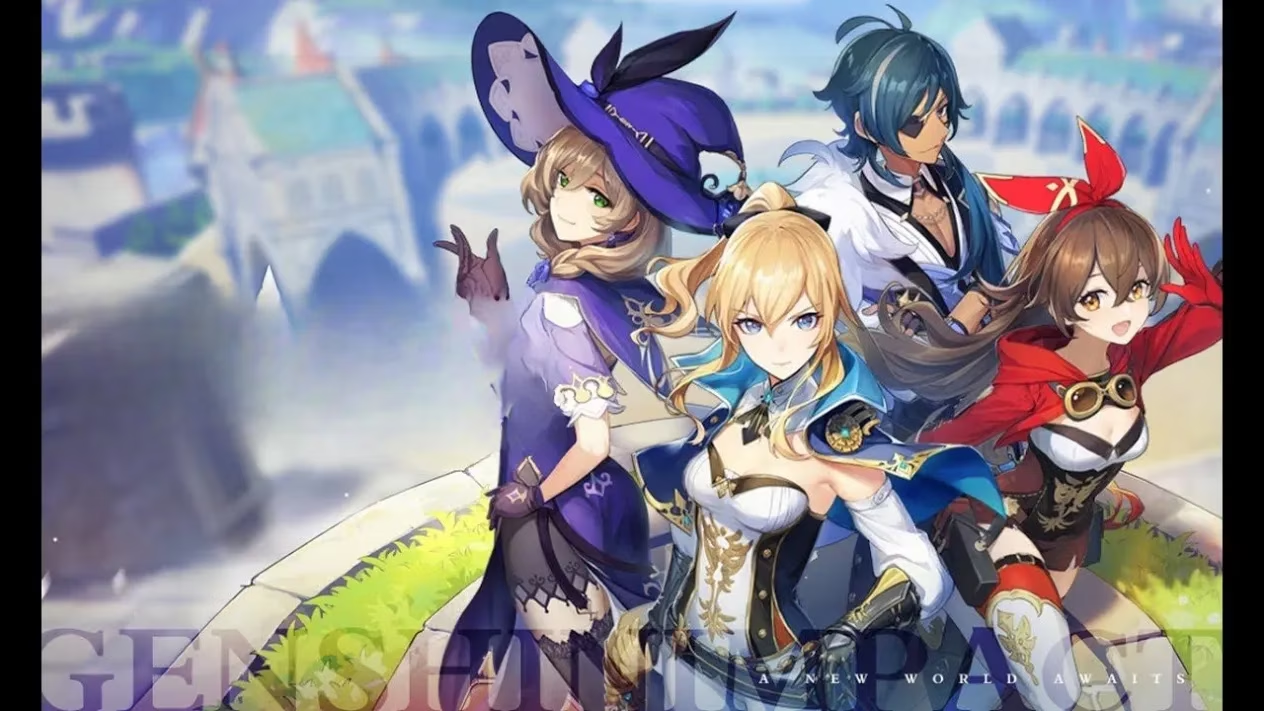
Some of the character designs in that early build were already iconic. Venti, the tone-deaf bard who was secretly a wind god, looked like he'd escaped from a visual kei band's crashed tour bus. Jean, the acting grand master, radiated the kind of authority that made me want to immediately submit a properly formatted leave request. And then there was the Traveler, a sibling-separated protagonist who was so gender-neutral in their dialogue choices that they could have been an emotionless mannequin – which, for a gacha game, was a strategic masterstroke. You were the camera, and the real stars were the five-stars.
Now, six years after that fateful beta, Genshin Impact has morphed into a cultural goliath that swallowed whole nations – literal ones, from Mondstadt to Natlan. The map has expanded like a conspiracy theory, and the lore has more layers than an onion that read too much philosophy. But I often find myself missing that janky 2019 demo, where the cliffs looked a bit unpolished and the voice acting sometimes sounded like a Pokémon episode dubbed in a bathroom. It was the raw, unfiltered promise of a world that would eventually house millions of us, a shared hallucination that somehow calcified into reality. In an industry that usually treats players like walking wallets, Genshin Impact's early days were a rare comet that actually decided to stay and become a sun.
Comments