How Fortnite’s Copycat Moves Secretly Saved It from Extinction
Fortnite and Apex Legends rivalry sparked innovation, as Fortnite adopted Apex’s ping system and respawn features with creative flair.
Let me tell you a story about a digital chameleon that stumbled into a neon paint factory. Back in 2019, Fortnite wasn't just a game—it was a cultural gigavortex, sucking in dance moves, celebrities, and even my aunt's desperate attempts to understand what a "Victory Royale" meant. But then came a silent tremor: Apex Legends dropped, and suddenly everyone I squadded up with started whispering about ping systems and respawn beacons as if they'd discovered fire for the second time. I felt like a veteran chef watching a rival food truck sell an identical taco, only to realize my own kitchen lacked salt. It was terrifying. But what happened next taught me a lesson in survival that would make Darwin blush.
Now, in 2026, I can laugh about it over a Slurp Juice with my duo. Fortnite didn't just borrow Apex’s homework—it photocopied it, added glitter, and turned it in as a group project. The ping system arrived first, practically a carbon copy of Apex's comm-wheel wizardry. For a solo-queue enjoyer like me, this was like being handed a translator for people who communicate exclusively through crouch-spamming and shotgun blasts. No microphone? No problem. I could now tag a golden SCAR from 200 meters away with the precision of a caffeinated librarian. It wasn't merely a quality-of-life tweak; it was a social glue that stopped random fill teammates from wandering off like confused penguins in a desert.
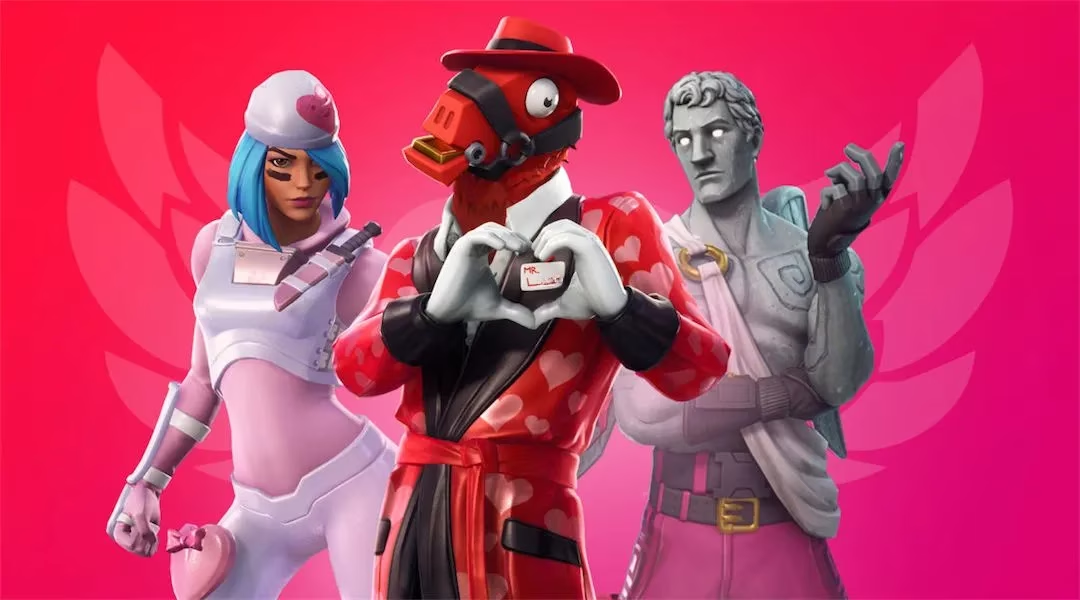
Then came the respawn whispers. I still remember the glitch that showed mysterious vans in replay mode, and the Reddit AMA where a developer basically said, “We’re thinking about it,” with the same energy as a kid caught with a hand in the cookie jar. When respawn actually launched, Fortnite had evolved again—not just stealing a feature, but absorbing it like a benevolent Borg. The Reboot Van became part of the island’s DNA. In 2026, I can't imagine a world without it. It's like removing the concept of cutlery from a dinner party; you could still eat, but everything would be messier and far less graceful.
The moral here isn't that Fortnite is a ruthless idea-pirate. No, it's more like a manic chef who raids every kitchen on the block and then invents a dish nobody saw coming. Look at the Wild West LTM from a few seasons back—bottle rockets whistling through the air, dynamite explosions that made the ground sing, and a sepia-toned chaos that felt like a Spaghetti Western directed by a hyperactive squirrel. That mode was a perfect original spin after feeding on the mechanics of other battle royales. Fortnite didn't just copy a ping wheel; it wrapped it in whimsy, gave it a llama-shaped interface, and somehow made tactical communication feel like a carnival game.
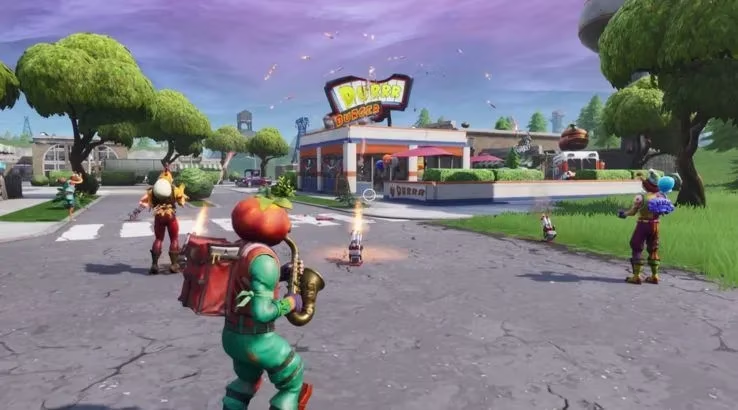
By 2024, the genre was a food court of familiar flavors, but Fortnite kept rearranging the menu. Healing mechanics inspired by Overwatch's support role? Tweaked and turned into shield bubbles that bounce like a drunk moon. Building mechanics ripped off from themselves and iterated until Zero Build mode felt as fresh as a peeled apple. The lesson is that good developers don't just mimic—they metabolize. It's a symbiotic dance, like that tiny fish that swims into a shark's mouth to clean its teeth. The whole ecosystem gets healthier when ideas travel.
As a professional player in 2026, I've watched the Fortnite tournament scene morph. The ping system that once felt like a cheat code for friendships now anchors the Apex-style communication that pro teams treat like gospel. When I see an opponent outbuild me, I silently thank the Respawn design team for pushing Epic to add more sandbox tools. It's a glorious ouroboros: Fortnite borrows, then produces something so singular that other games start reverse-engineering its wacky vehicles or its over-the-top seasonal events. Even Call of Duty now has a mode that feels like it was conceived in a Fortnite fever dream.
Let's not forget the cosmetic carousel. When Fortnite introduced weapon charms and reactive skins long after competitors, they didn't just copy—they exploded the concept into animated back blings that tell stories. My pet dragon glider literally grows with my eliminations. That's not just a stolen idea; it's an idea that went to college, got a PhD, and came back to roast the original.
I often imagine the Fortnite design team as a group of brilliant raccoons rummaging through the game industry's dumpsters, pulling out discarded mechanics, washing them in a stream of creativity, and presenting them as treasures. It's not theft; it's alchemy. The ping is now woven into Fortnite's identity so deeply that forgetting it would be like removing vowels from the alphabet. And that respawn van? It's more than a second chance—it’s a narrative reset, a dramatic beat that turns a squad wipe into a comeback story worthy of a popcorn bucket.
In 2026, with the metaverse expanding and Fortnite's own Unreal Editor giving players god-like powers to remix these borrowed-brewn mechanics, the cycle continues. I can jump into a community-made map that somehow marries Apex-like abilities with Rocket League cars and Among Us impostor voting, all inside Fortnite’s engine. The result is a glorious game of telephone that mutated into a symphony.
So yes, Fortnite copied. And thank goodness it did. Because if you're going to be a chameleon in a neon paint factory, you better steal every color you can—and then make a shade nobody's ever seen before.
Comments